Sunday, February 23, 2020

The World’s Oldest Living Animal

The World's Oldest Living Animal

While cyanobacteria have been on earth for 2.8 billion years, jelly fish and sturgeon can also be counted amongst the world’s oldest living animal beings.

Human beings seem to be at the top of the food chain in the animal kingdom, but some creatures outlast humans in terms of longevity. Animals living on the land, in the air, and in water can last for many decades or even centuries.

Most animals people come into contact with on a daily basis, such as dogs and cats, will only live a fraction of their owners’ lives. But under the right circumstances, many animals worldwide can live for many decades or even centuries.

If the mortality rate of a species does not increase after maturity, the species does not age and is said to be biologically immortal. Many examples exist of plants and animals for which the mortality rate actually decreases with age, for all or part of the lifecycle.

If the mortality rate remains constant, the rate determines the mean lifespan. The lifespan can be long or short, though the species technically “does not age”.

Hydra species were observed for four years without any increase in mortality rate.

Other species have been observed to regress to a larval state and regrow into adults multiple times.

The hydrozoan species Turritopsis dohrnii is capable of cycling from a mature adult stage to an immature polyp stage and back again. This means no natural limit to its lifespan is known. However, no single specimen has been observed for any extended period, and estimating the age of a specimen is not possible by any known means.

At least one hydrozoan and one scyphozoan can also revert from medusa stage into polyp stage.

The larvae of skin beetles undergo a degree of “reversed development” when starved, and later grow back to the previously attained level of maturity. The cycle can be repeated many times.

Some animal species on Earth have survived the most extreme conditions through evolution and have the ability to adapt to new environments. These surviving old species have refined skills and physical traits that resemble ancient and extinct species. These animals are referred to as “living fossils.” Cyanobacteria are the world’s oldest living animal. They are approximately 2.8 billion years old. Below is a list of other living things that have existed on this planet for an astonishing long time.

10. Martialis Huereka – 120 million years old

Martialis Huereka is an ant species discovered in 2000 in Amazon rainforest. The ant is named “Ant from Mars” as they look extremely different from the rest of the ant species. Martialis huereka is considered the oldest ant species, estimated to have evolved around 120 million years ago. The ant lives in soil, measures around 0.12 inches and has no eyes. The ant has hair-like protrusions that enhance its senses. Biologists use the Martialis huereka to study other ant species in greater depth.

9. Frilled Shark – 150 million years old

Frilled shark first appeared on earth around 150 million years ago and is considered the oldest of the shark family. The frilled shark was discovered in the year 2007 in Tokyo, Japan. The animal measures 5 feet in length with over 300 teeth arranged in more than 25 rows. The animal thrives deep in the ocean as it has a huge liver having low density oils and hydrocarbons. The shark also has extra physiological adaptations. The frilled shark is rare due to over pollution and changes in ocean temperature. The female frilled shark can keep its slow-growing embryos for over three years and is considered the animal with the longest gestation period.

8. Horseshoe Shrimp – 200 million years old

The horseshoe shrimp evolved about 200 million years ago, the same time dinosaurs appeared. The horseshoe shrimp is a tiny animal and was discovered in 1955. The tiny animal can survive in any weather condition and geological alterations. The animal’s eggs can remain dormant for many years and they can hatch when right conditions are met. Researchers were able to hatch the eggs of the shrimp in a laboratory for studying.

7. Sturgeon – 200 million years old

Sturgeon, like the horseshoe shrimp, evolved 200 million years ago and is the oldest of the bony fish family. The sturgeon has 27 species that have similar characteristics. The 5-foot fish weighs about 441 pounds and is found in Eurasia and North America. The fish can live up to 100 years old. The sturgeon lays eggs in abundance, but its main threat is humans who harvest the eggs at high rates for food. These eggs are highly valued as caviar. The sturgeon is near extinction but has now been classified as a protected species.

6. Coelacanath – 360 million years old
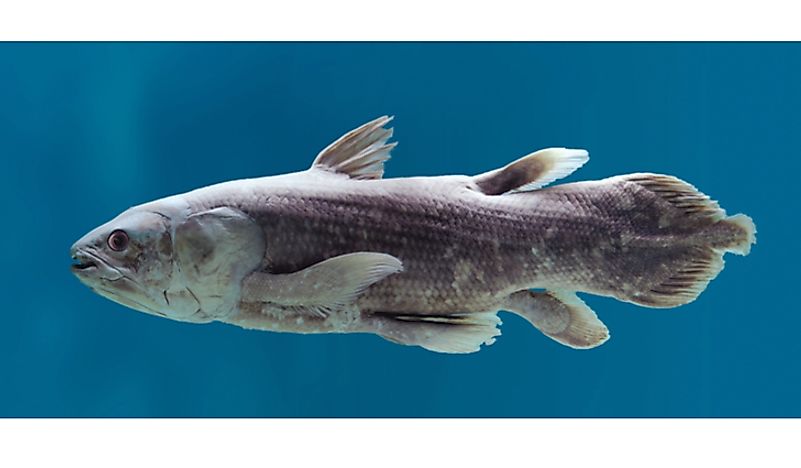
#6 Coelacanath – 360 million years old

The coelacanath is a critically endangered fish living in deep waters at a depth of about 2300 feet. The fish evolved about 360 million years ago and had a lifespan of 60 years. The fish weighs about 198 pounds and measures 6.5 feet in length. Coelacanath has electrosensory organs that detect prey easily and can widen their mouth to catch large preys. The fish’s leg-like lob fins create a unique movement that makes it appear like a trotting horse. The coelacanath’s fin structure is unique in a way that it cannot be found in any other fish.

5. Horseshoe Crab – 445 million years old
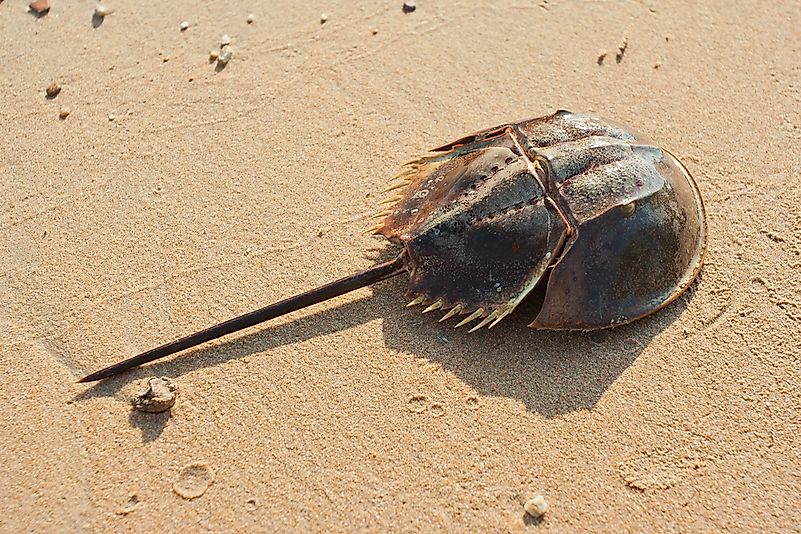
#5 Horseshoe Crab – 445 million years old


The horseshoe crab evolved around 445 million years ago and lived in shallow ocean waters. The crab has an exoskeleton, long tail, and spine. The horseshoe crab has nine eyes found throughout its body. Two of the crab’s eyes are used for sight while the rest are light receptors that manipulate movement. The horseshoe crab can sense ultraviolet rays. The crab has five pairs of legs with a claw on the tips except for the last pair. The legs are used for walking, swimming, and directing food into the mouth, which is located at the center of the legs.

4. Nautilus – 500 million years old
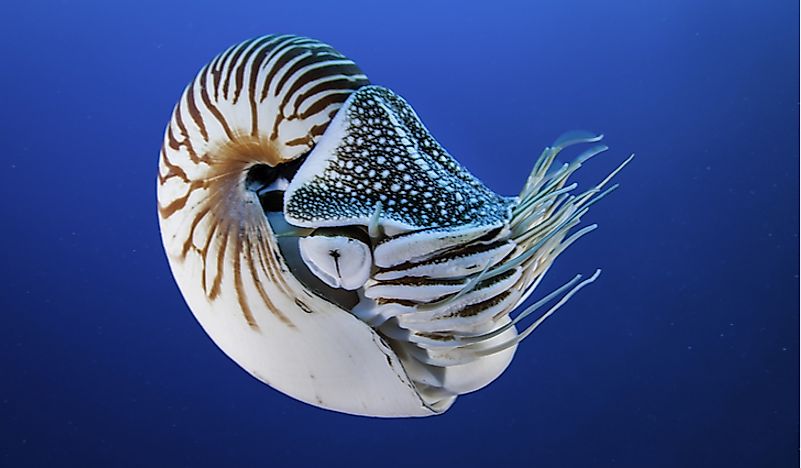
#4 Nautilus – 500 million years old


The Nautilus evolved around 500 million years ago, way long before the dinosaurs appeared. It is therefore considered a living fossil. Nautilus can be found in tropical water in Andaman, Fiji, and the Great Barrier Reef, living at a depth of about 2200 feet in the ocean. The animal’s body has a many-chambered shell that makes it resemble an octopus. The animal’s mouth is ringed by 100 small tentacles used to fight predators and catch prey. The Nautilus is part of the last surviving members of the mollusks.

3. Jellyfish – 550 Million years old
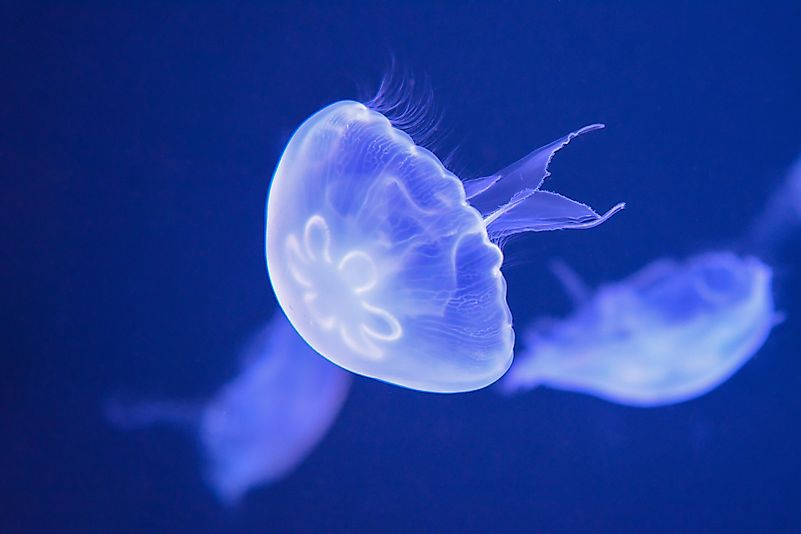
#3 Jellyfish – 550 Million years old


The jellyfish evolved on earth about 550 million years ago and is considered the oldest multi-organ animal in the whole world. The jellyfish lacks a brain and a nervous system but only has primitive digestive and sensory organs. The animal has a transparent, jelly-like image since 90% of its body is made up of water. The animal comes in different shapes and color and can be found in all the oceans of the world. The box jellyfish, which is the most poisonous species on earth, belongs to this family of jellyfishes. The tentacles of the box jellyfish have over 5,000 stinging cells which can instantly kill a human and many large animals.

2. Sponge – 580 million years old
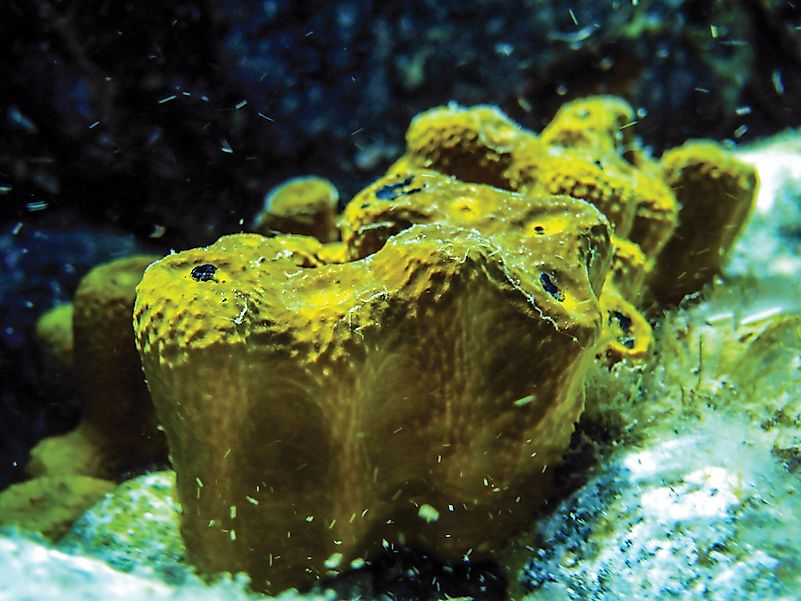
#2 Sponge – 580 million years old


The sponge is a primitive animal that resembles a plant. The sponge lacks internal organs and body parts and reproduces by vegetative propagation, which means, when a part breaks off, it can grow into a new sponge by latching itself onto another surface. The sponge evolved around 580 million years ago in the oceans where they live in colonies in varying depths of the ocean. It is estimated that the sponge has about 5,000 different species in the world. The sponge supports a large part of marine life to this day. The body of sponges has many canals that shelter small aquatic species.

1. Cyanobacteria – 2.8 billion years old
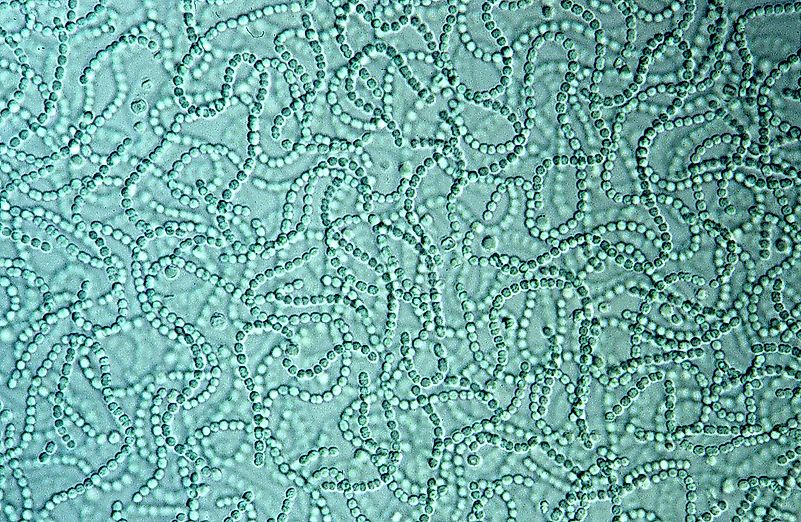
#1 Cyanobacteria – 2.8 billion years old


Cyanobacterium is the oldest known animal species on earth having evolved about 2.8 million years ago. They are also known as green-clue bacteria. Cyanobacteria live in large colonies and produce oxygen through photosynthesis, a process through which they obtain their energy. Cyanobacteria are considered major contributors of oxygen in the world to date. These bacteria sustain all oxygen-breathing organisms. The cyanobacteria reproduce through micro fusion. The bacteria can be found all over the world in most aquatic and terrestrial habitat. Soil crusts of Cyanobacteria prevent erosion and help to retain water since they stabilize soil.

The post The World’s Oldest Living Animal appeared first on Gradaxis.


source https://gradaxis.com/the-worlds-oldest-living-animal/

Sunday, February 9, 2020

Effects of Global Warming on Human Being

Effects of Global Warming on Human Beings

Global warming will have long-term negative effects on the human race and also adversely affect all other life on earth.

Global warming has brought about possibly irreversable alterations to Earth’s geological, biological and ecological systems. These changes have led to the emergence of large-scale environmental hazards to human health, such as extreme weather, ozone depletion, increased danger of wildland fires, loss of biodiversity, stresses to food-producing systems and the global spread of infectious diseases. In addition, climatic changes are estimated to cause over 150,000 deaths annually.

To date, a neglected aspect of the climate change debate, much less research has been conducted on the impacts of climate change on health, food supply, economic growth, migration, security, societal change, and public goods, such as drinking water, than on the geophysical changes related to global warming. Human impacts can be both negative and positive. Climatic changes in Siberia, for instance, are expected to improve food production and local economic activity, at least in the short to medium term. Whereas, Bangladesh has experienced an increase in climate-sensitive diseases such as malaria, dengue, childhood diarrhoea, and pneumonia, among vulnerable communities. Numerous studies suggest, however, that the current and future impacts of climate change on human society are and will continue to be overwhelmingly negative.

Effects of Global Warming on Humans

The fact that global warming poses a threat to the environment and wildlife has been a public concern for years. Lesser known is the degree of global warming’s direct impact on humans around the world. Research has been conducted to explore the effect on biological, ecological, and geological systems, but less research has focused on how humans specifically are affected by global climate change.

Some of the many factors that directly influence human lives include:

  • Extreme weather.
  • Ozone depletion.
  • Spread of infectious diseases.
  • Changes to food and water supplies.

The humans most directly affected by these issues are those living in poverty and marginalized communities. Not only are these individuals more likely to experience the negative consequences of global warming, but are also less likely to have the financial resources to deal with these issues.

As a result of these changes, the World Health Organization estimates that at least 160,000 lives have been lost since 1950. Other experts, like the Global Humanitarian Forum, believe that number is much higher and estimate that over 300,000 deaths occur annually as a result of global warming. Additionally, this organization suggests that the global economy loses around $125 billion. This article takes a closer look at the global warming threats facing humans around the world.

Health Impacts

The health impacts of global climate change are divided into three specific categories:

  • Those caused by climate changes to ecological systems.
  • Direct effects.
  • Indirect effects.

The health issues that result from ecological systems changes are often secondary effects of events like changes in agricultural production, coastal ecosystem production, and mosquito population size. The global warming events that directly influence human health include: droughts, air pollution, natural disasters, and heat waves. Indirectly, human health is affected by conflicts over natural resources (particularly fresh water), forced resettlement, mental issues after disaster survival, and increasing levels of poverty.

As the climate becomes warmer, dengue- and malaria-carrying mosquitos are able to rapidly multiply and infect thousands of unsuspecting victims. Additionally, food is at risk of contamination in warmer climates, resulting in increased diarrheal disease which often kills children, particularly those under 5 years of age. Crop production is also reduced, leading to increased malnutrition and even starvation in extreme cases. Additionally, increased temperatures often result in increased pollutants in the air, which has been linked to asthma and other respiratory problems. Global warming also allows for faster and wider spread of infectious diseases.

Human Settlement Impacts

Community location is also at risk as a result of global warming. This is particularly true of coastal regions, which are threatened by continuously rising sea levels. Rising sea levels are particularly detrimental on small islands as people living in these areas have no alternatives for resettlement.

Within coastal communities, the poorest individuals tend to live in the floodplains. When flooding does occur due to increasing natural disasters like hurricanes and tsunamis, the poorest individuals most often lose their homes. Unfortunately these people are less likely to have home insurance, savings accounts, or access to credit in order to overcome the disasters. Estimates suggest that millions of people will suffer sea level rise flooding by 2080. This will disproportionately affect large urban areas. Currently, approximately 66% of cities with over 5 million inhabitants can be found in low-lying coastal regions.

Climate Security

Climate security is a term used to describe threats and insecurity to a country due to the effects of climate change. These changes often make an already difficult situation worse, which can lead to violence and instability in international relations. As global warming continues to cause sea level rise, unpredictable weather patterns (like heavy rains), drought, desertification, and lack of access to water sources, inhabitants of the most affected regions will likely take part in environmental migrations as they search for safer homes. These large-scale migrations are expected to provoke violent conflict as groups of people begin fighting for access to scarce resources.

Researchers have already identified several instances in which global warming and climate change have resulted in conflict. For example, the Syrian Civil War began after approximately 1.5 million people sought new homes because of drought and crop and livestock failure. The Somali Civil War has also been connected to extreme heat waves and drought. The same is true of the War in Darfur and the Islamist Insurgency in Nigeria. Researchers have calculated that for every standard deviation temperature increase, there is a 4% increase in interpersonal violence and a 14% increase in intergroup violence. History shows that this pattern of climate change followed by conflict has been happening since before the preindustrial age.

Effect of Global Warming on Sources of Energy

Just as global warming and climate change can negatively influence access to food and water, it also has an impact on access to energy resources. Thermal power stations, which use fossil fuel derived heat energy to create electricity, require freshwater for cooling. As freshwater becomes more scarce due to drought, the demand becomes more pronounced. Additionally, as temperatures continue to increase, thermal power stations produce electricity less efficiently, which requires burning more fossil fuels to maintain output levels.

Oil and natural gas deposits are often found off of coastal areas. Higher occurrences of hurricanes, flooding, cyclones, and tropical storms threaten the infrastructure used to extract these resources. In the post-Hurricane Katrina Gulf of Mexico, 126 oil and gas stations were destroyed and another 183 were damaged. This disruption in extraction often results in increased prices for consumers, which again has a more detrimental impact on those individuals living in poverty.

The same natural disasters that threaten the oil and gas industry also work against nuclear energy. Because salt water causes corrosion to processing plants, freshwater must be utilized. When freshwater is unavailable, explosions, nuclear meltdowns, and leaked radioactive materials are all likely to occur. This was seen in the Fukushima Daiichi nuclear disaster in Japan after the earthquake and tsunami of 2011. Increased temperatures have also forced other nuclear power plants to shut down over safety concerns, as in France in 2003, 2006, and 2009.

Even renewable energy sources such as hydroelectricity are not safe from the effects of global warming. Hydroelectricity relies on a large amount of freshwater to run over dams in order to move turbines and produce energy. Decreases in water availability mean decreases in energy production at these sites as well. Research conducted along the Colorado River has shown that an increase in temperature of 2° Celsius results in a 10% decline in rainfall. In Brazil, for example, hydroelectric energy production is expected to decrease by 7% by the year 2100 due to global warming.

The evidence is clear and should not be ignored. Global climate change and warming threaten the lives of plants, animals, and people. If governments and industries do not come together soon to reverse these effects, it may be too late.

What are the Effects of Global Warming?

The effects of global warming include extreme weather, ozone depletion, the spread of infectious diseases, and changes to food and water supplies.


Oil Spills Affect The Environment, How?

How Do Oil Spills Affect The Environment

Much of the oil we use for machinery, vehicles and industry is deep below the surface of the Earth oftentimes in the middle of the ocean. When oils rigs or machinery malfunction or break, thousands of tons of oil can seep into the environment. Oil spill effects on environments and habitats can be catastrophic: they can kill plants and animals, disturb salinity/pH levels, pollute air/water and more. Oil spills have widespread and long-lasting impacts on the environment.

The oil environmental impact on water in damaging in a variety of ways. When there are oil spills in the ocean or freshwater, it does not blend with the water. Oil floats on the surface of salt and fresh water. Over a very short period of time, the oil spreads out into a very thin layer across the surface of the water. This can block sunlight from reaching oceanic environments, which can severely impact producers and, thus, the entire food chain of an ecosystem.

An oil spill refers to a form of pollution that involves the discharge of a liquid petroleum hydrocarbon into nature, especially marine environments, because of human activities. In some cases, it is possible for the oil to be spilled in the deep seas. The damage is doubled when the spillage occurs close to the shore since it will affect both the water in the ocean and the habitat along the shoreline. Despite the common association with marine ecosystems, an oil spill can also occur on land. The spillage can arise from several sources including tankers, drilling rigs, offshore platforms, oil wells, and other sources. Oil spills are disastrous for the environment, to the economy, and to society in general.

Effects of Oil Spills

Effect on Water

The most apparent effect of oil spills is the impact they have on the water itself. When the oil is spilled, the water does not mix with oil thus creating a sheen of oil floating on the water. The oils spread fast over a short time to cover vast expanses of the water body. The high speed of the spread of the oil is because of the constant waves, currents, and wind in water bodies. This oil layer, which is known as a slick, is usually thin with a thickness of about 0.01 mm.

Different types of oil have varying reactions when they meet water. For some, they break down quickly while others evaporate slowly and gradually. Regardless of the rate of breakdown, the oil sheen will end up disintegrating and some of the remains will find their way to the ocean floor, especially in shallow waters. Nature has a way to deal with such remains, in the form of microbes, but the damage to the water will remain. Aside from the contaminated water on the surface of the water bodies, ocean floor habitats suffer as well.

Effect on Marine Life

The effects on marine life are far reaching in direct and indirect ways. A marine creature will be affected directly when it ingests contaminated water and may end up dying. If it does not die and a predator far from the spillage eats it, then the contamination chain continues. Another way that marine life is affected is through the destruction of the habitat, which creates a ripple effect in the entire food chain. In addition to death, oil spills threaten the very survival of marine life. For example, fish have reduced reproduction abilities after ingesting too much oil. Marine birds are also affected as oil clings to their feathers thus reducing the ability of the bird to fly and protect itself from the elements.

Effect on the Coastline

The coastline’s damage is closely related to the effect on marine life. Scenes of dead birds and fish coated with oil are common on shorelines located close to oil spillages. This oil also covers the sand and the vegetation thus leading to further effects on the environment. Unless there is an active cleanup of the shoreline, the natural integration of oil is slow, thus increasing the time the environment is exposed to harmful substances.

The World’s Worst Oil Spills

The Persian Gulf oil spill, the worst oil spill in history, caused the release of between 5 and 10 million barrels of oil (as much as 300 million gallons) into the Persian Gulf in 1991. The damage was far reaching, spoiling vast tracts of coastal habitat in Kuwait and Saudi Arabia as well as having catastrophic effects on marine populations of several rare and endangered species. The Amoco Cadiz Oil Spill Disaster, the worst oil spill of its time, occured on March 16, 1978. The sinking of the Amoco Cadiz released 69 million gallons of oil into the sea causing the deaths of over 20,000 sea birds as well as countless other fishes, echinoderms, and crustaceans. It was later calculated that the disaster caused an estimated loss of $250 million USD to the fishing and tourism industry.


Reasons for Animal Population Decreases

Reasons for Animal Population Decreases

Populationis the number of individuals of a particular species in an area. Animal and plant populations depend on many things for survival. Reasons for Animal Population Decreases, Limiting factors like the availability of food, water, and shelter can impact an organism’s population. Poaching, habitat degradation, climate change, invasive species, and diseases threaten to wipe out wildlife in large numbers.

In nature, populations of animals and plants are linked together like a puzzle. The pieces of the plant and animal puzzle depend on each other to form a complete picture. If something is wrong with any of the pieces, it impacts the whole puzzle.

In the natural world, limiting factors like the availability of food, water, shelter, and space can change animal and plant populations. Other limiting factors, like competition for resources, predation, and disease also impact populations. If any of the limiting factors change, animal and plant populations also change.

Some changes may cause a population to increase. If there are more plants than usual in an area, populations of animals that eat that plant may increase. If one animal’s population increases, the population of animals that eat that animal might also increase.

Increases in population aren’t always good. Sometimes a population will grow too large for the environment to support. Other changes in limiting factors can cause a population to decrease. If a population becomes diseased, the population may decrease and the population of animals that eat the diseased animals will also decrease.

Wildlife refers to all the plant and animal species that survive in natural, wild areas throughout the world. A delicate balance must exist among all living things in order to sustain healthy ecosystems. Unfortunately, that balance has been thrown off by human involvement. Mammal, bird, reptile, fish, and amphibian populations have declined by 52% during the last 4 decades according to the World Wildlife Fund. The forces behind this unprecedented destruction are many. This article takes a look at some of the major causes of the decline in wildlife.

Major Causes of Wildlife Loss

Humans use plants and animals for nearly every facet of daily life. Food, clothing, medicine, souvenirs, pets, and building supplies are just some of the uses that have led people to rely on wildlife. Humans fulfill these needs by overfishing rivers and oceans, poaching endangered animals, and overhunting important species. Wildlife exploitation is responsible for 37% of the loss in wildlife biodiversity. We are taking more than mother nature can provide.

Human Land Use Competing for Space with Wildlife

In addition, to keep up with unsustainable human population growth, more and more land is required. Cities are expanding at alarming rates and stretching beyond their original borders. Housing developments are infringing upon plant and animal homes by covering the earth with concrete, bulldozing hills to create flat lots of land, and damming rivers and streams to produce hydro-electricity. It’s no wonder that habitat degradation and change have resulted in a 31.4% loss of wildlife. Related to this is complete habitat loss, responsible for 13.4% of wildlife loss. Habitat loss is occurring in an effort to keep up with demands for agriculture which require huge tracts of land to produce feed. This feed is used for animals that are raised for meat on factory farms. To obtain these tracts of land, deforestation practices are utilized. Deforestation tears down trees and large plants, stripping animals of shelter and food.

Pollution

All of this human development produces pollution. Waterways are polluted with runoff from manufacturing facilities, factory farms, and the gas and oil that collects on roadways. Mining practices discard unusable heavy metals and minerals into groundwater sources. Air is polluted by the fumes from traffic and burning fossil fuels. Pesticides sprayed onto crops inadvertently kills other plant species. Garbage and littering fills the land with non-biodegradable plastics that can be consumed by animals both on land and in sea. All of these reasons and more explain why pollution is directly responsible for the loss of 4% of wildlife biodiversity. But, indirectly, it is responsible for more deaths because it causes global climate change. All of those greenhouse gases released into the air not only have a direct impact on the quality of air and water but they go on to trap solar radiation which leads to increased global temperatures, natural disasters, and glacial melting. Global climate change has exterminated 7.1% of all wildlife.

Invasive Species

Human involvement does not stop with these causes. Increased globalization means that people are now traveling farther and faster than ever before taking with them new ideas, business prospects, and finished goods around the world. While this sounds like a positive advancement for civilization, it also comes with negative consequences. This increased mobility has also allowed for the spread of non-native plants and animals to move into new areas. Non-native wildlife is referred to as invasive species and they are responsible for the loss of 5.1% of all wildlife and for threatening 42% of all endangered species. Invasive species move into an area and quickly reproduce and spread. They outnumber native species, preying on them and competing with them for food resources. This decreases the biodiversity thereby changing the structure of the ecosystem.

Disease

Finally, disease among plants and animals is responsible for a 2% loss in biodiversity. Disease is almost an aftermath of the aforementioned causes of wildlife loss because it occurs in unhealthy and unbalanced ecosystems. Although they are naturally occurring, an unhealthy ecosystem cannot fend for itself and fight off virus, fungus, and bacteria in the same way a healthy ecosystem can. Lower levels of biodiversity mean that the plant and animal community is less resilient to disease.

What Can Be Done?

Within urban areas, residents need to be educated and empowered to work at a local level to promote small scale conservation efforts. Business owners need to be held accountable for the environmental degradation that their work may cause and further mandated to reduce and offset this destruction. Policy makers on an international level need to tackle wildlife trade and poaching concerns. National government should focus on converting their nations to renewable energy sources. On an individual level, people need to focus on reducing, reusing, and recycling products. This problem is large, it cannot be fixed by one person. Action is necessary across boundaries and cultures, from the lowest levels of society to the highest. The problem can no longer be ignored.

What is Causing the Decline in Animal Populations?

Some of the major factors affecting wildlife populations include human encroachment, pollution, invasive species, and disease.

Major Causes Of Decline In Wildlife Populations Worldwide

Rank Cause Of Species Loss % Of Loss Due To The Cause
1 Exploitation 37%
2 Habitat Degradation/Change 31.4%
3 Habitat Loss 13.4%
4 Climate Change 7.1%
5 Invasive Species/Genes 5.1%
6 Pollution 4%
7 Disease 2%

The post Reasons for Animal Population Decreases appeared first on Gradaxis.


source https://gradaxis.com/reasons-for-animal-population-decreases/

How Palm Oil Production Is Endangering Species

How Palm Oil Production Is Endangering Species

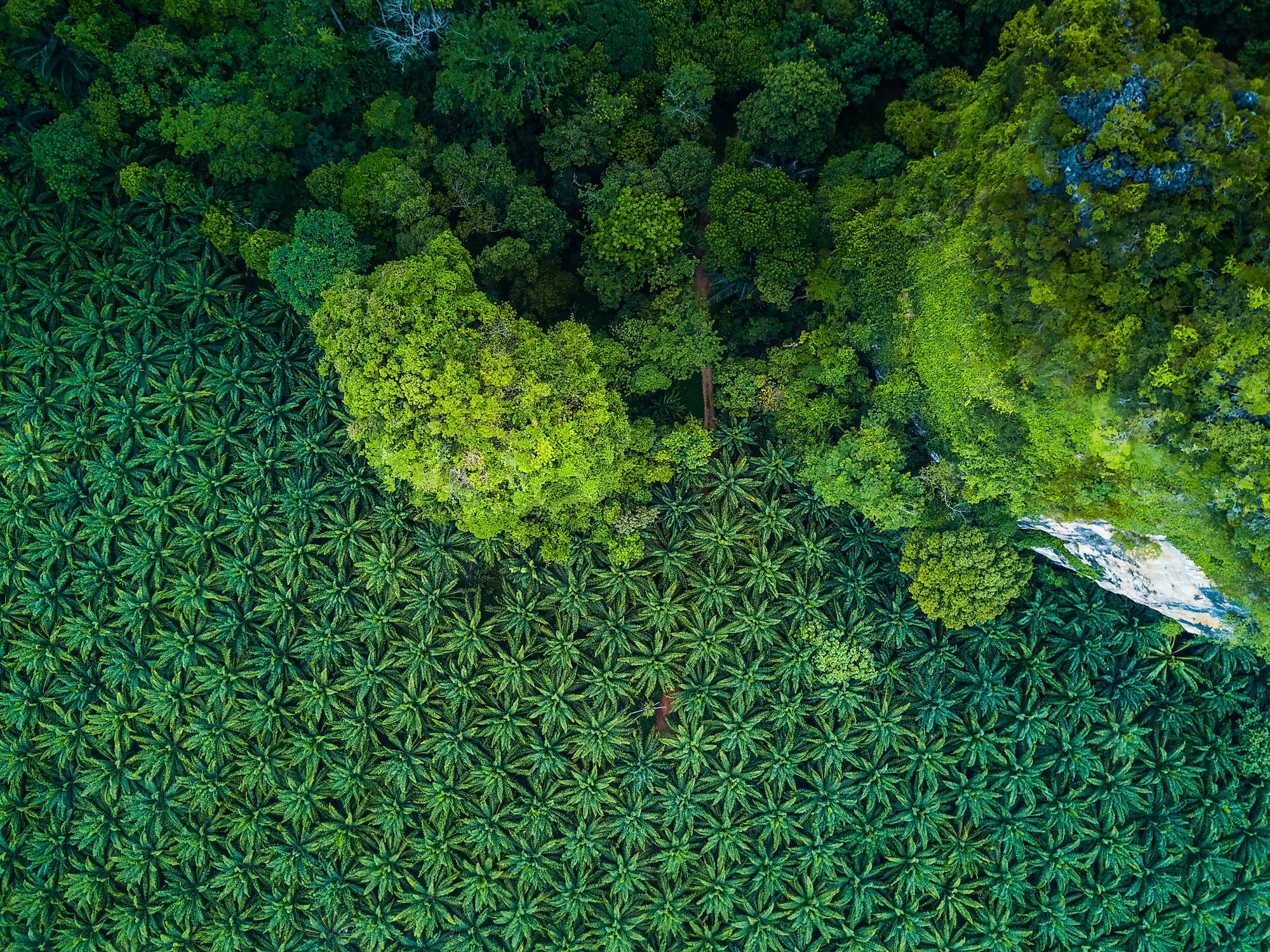
Oil palms threaten about 193 endangered, critically endangered, and vulnerable species globally. How Palm Oil Production Is Endangering Species Rainforest jungle in Borneo, Malaysia, destroyed to make way for oil palm. The International Union for the Conservation for Nature or IUCN warned about the dangers posed by palm oil production particularly on wildlife.

The international conservation group said that production of the commonly used vegetable oil has decimated the animal and plant life in Indonesia and Malaysia. It also threatens the pristine forests in South America and Africa.

IUCN said that habitat loss linked to expanding palm oil plantations pushed some of the iconic species, which include tigers, orangutans, and gibbons to the brink of extinction. Endangered species are driven into the brink of extinction as a result of their habitats being destroyed for palm oil production.

The lucrative crop was found to have harmed 193 animals and plants included in the IUCN’s Red List of endangered species.

Oil palm tree produce fruits from which oil palm is extracted. The scientific name of the tree is Elaeis guineensis. For thousands of years, people have cultivated oil palm in different settings and for various purposes. Since the rise of consumerism and processed food, palm oil has increased to become a global oil commodity. As of 2017, oil palms occupied 18.7 million hectares of industrial-scale plantations. Some view oil palms as land efficient oil crops because they occupy less land than soy and rapeseed and produce more per hectare compared to both soy and rapeseed. Oil palms produce around 35% of all vegetable oil but only sit on less than 10% of land occupied by oil crops. Today oil palm plantations can be found in different countries. Countries with the largest acreage of oil palm in the world include Indonesia, Malaysia, Nigeria, Columbia, Brazil, and Papua New Guinea.

Palm-oil Plantations Trigger Deforestation

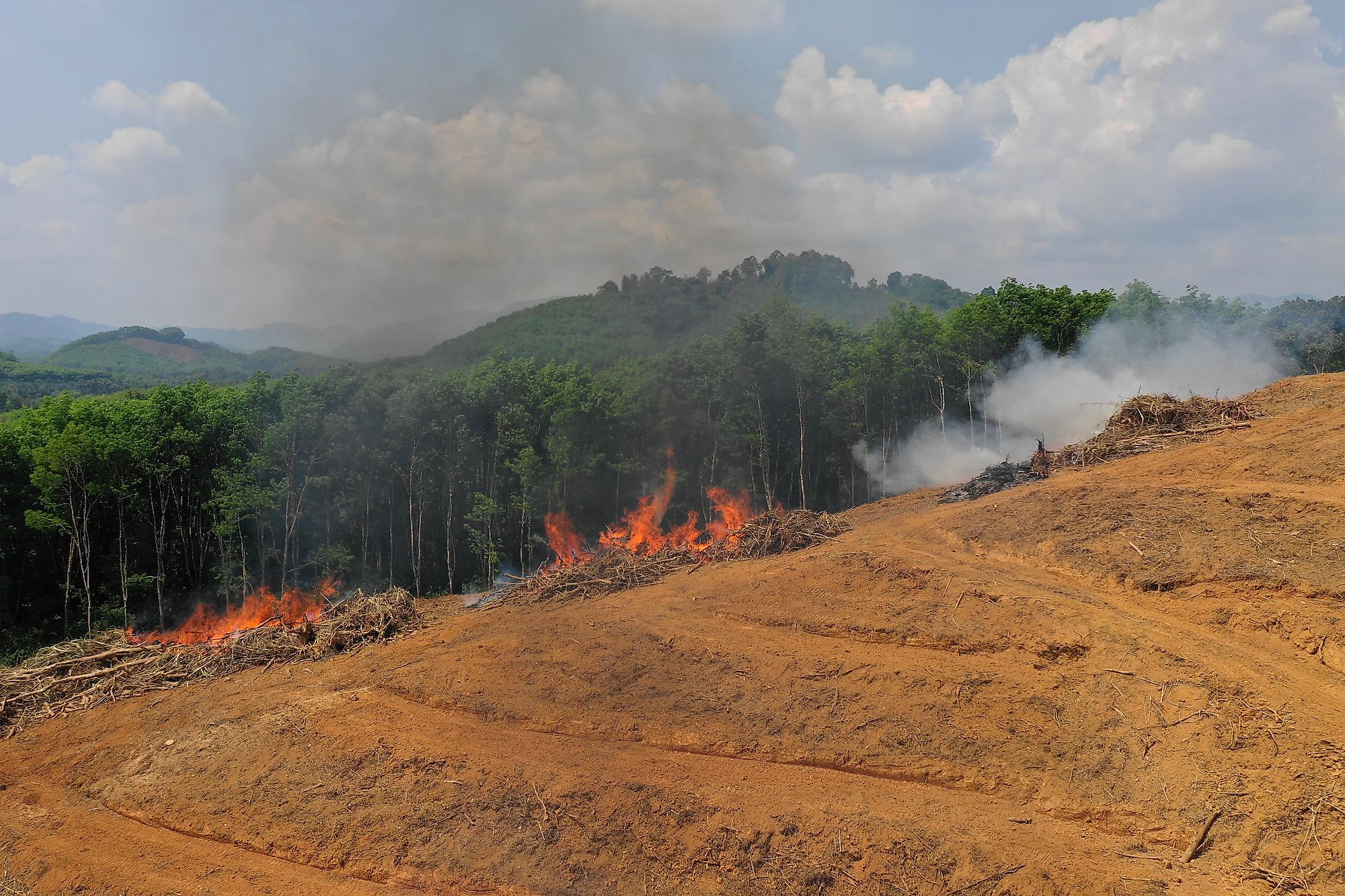
Over the years, oil palm plantations have led to high rates of deforestation in palm oil-producing countries. The growth of the palm oil industry in Malaysia has contributed to about 47% of deforestation experienced between 1972 and 2015 in the country. In Indonesia, which is the largest producer of palm oil in the world, about 16% of deforestation was attributed directly to the production of palm oil over the same period. Similar deforestation patterns can be found on the island of Borneo, West Africa, Central, and South America. In Nigeria, one study suggested that oil palms accounted for 3% of forest loss in the early 2000s. Deforestation leads to the destruction of habitats that are crucial for the survival of many species.

Monoculture Destroys Plant Genetic Diversity

Agriculture is ranked as one of the most common threats to species listed on the IUCN Red List. An in-depth search of keywords such as “palm oil,” “oil palm,” and “palm plantation” on the IUCN Red List database reveals that the production of the crop threatens 405 species. One hundred ninety-three of the species mentioned are listed as vulnerable, endangered, or critically endangered. Some of the most severely affected species include orangutans, gibbons, and tigers. Tree and other plant species are also affected as some planted areas have over 99% less plant and tree diversity compared to natural forests. Studies have also shown a reduction in mammalian diversity of 65-90% in oil palm plantations. A majority of species groups decline in both abundance and richness. Given the monoculture nature of oil palm cultivation, it is hardly surprising that plant diversity is lost.

Invasive Traits 

There have been reports of the species escaping cultivation and naturalizing. Such incidents of invasive oil palms have been noted on several islands in Micronesia. There are also unconfirmed reports of invasive palm oil trees in Bahia, Brazil, where oil palms are threatening remnants of native coastal Atlantic forest. While the plant is not a major invasive species, it is essential to limit its spread in sensitive ecological sites.

Pest Spillover Is Highly Likely

Oil palm plantations provide favorable conditions and breeding grounds for pests that affect crops. Some of the pests commonly found in oil palm plantations include rats, Rhinoceros beetles, caterpillars, and other leaf-eating insects. Experts have raised concerns that the accumulation of such pests in oil palm plantations could lead to a spillover of damaging pests to adjacent forests. For example, a spillover of large numbers of Rhinoceros beetle could cause significant damage to leaves of native plant and tree species. Oil palm plantations also serve as breeding grounds for microorganisms such as bacteria, fungi, and viruses that cause diseases such as stem rot, a severe fungal infection that affects the oil palm truck. An outbreak of diseases could potentially affect surrounding forests.

Irresponsible Use Of Pesticides Is Bad For The Environment

Conventional agriculture utilizes a “pick and choose” technique of pesticide use, which treats the symptoms of poor land management instead of acknowledging the underlying problems. The method fails to understand agriculture as a system and its impact on wildlife. Pesticides used to control pests and diseases in plantations also cause substantial damage to insect and animal populations living around the plantations. Pesticide poisoning of wildlife may occur as a result of acute or chronic poisoning. Acute poisoning occurs due to short exposure. It can occur when animals consume vegetation that has been treated with harmful pesticides. Chronic poisoning happens for a long period when the levels of pesticides are not immediately fatal. Consumption of animals that have consumed pesticides by prey species can also lead to secondary poisoning. Pesticide use can also lead to indirect effects on the habitat and food supply. For example, insecticides reduce pollinators, which consequently affects plant pollination.

Destruction Of Forested Riparian Reserves

Freshwater fish are dependent on the water quality of streams, rivers, and lakes in which they live. The most widely used strategy to protect the quality of water in production areas is the retention of forests along rivers and streams. Forested riparian areas can reduce chemical runoff, sedimentation, and maintenance of temperature regimes in rivers and streams. In both Malaysian and Indonesia, the retention of riparian reserves is a requirement of the law. Unfortunately, non-compliance is common due to unfortunate enforcement and legal vagueness. In Indonesia, most of the large and small rivers should have a 328 and 164 feet buffer of natural vegetation, respectively. The country, however, lacks definitions of what should be considered a large river, a small river, and natural vegetation.

Fertilizer Use Creates Toxic Runoff

Fertilizers used in oil palm plantations have large quantities of phosphorus and nitrogen. When such chemicals are carried and eventually reach waterways, they can trigger the hastened progression and growth of aquatic plants. The fertilizers can promote fast growth of nuisance algae in a process known as eutrophication. Eutrophication can adversely affect water quality through increased growth of aquatic weeds and algae, which is harmful to marine life. Decomposition of dead algae at the bottom of the rivers and streams could also lead to the removal of oxygen from the water creating zones that are unsuitable for aquatic life.

Use Of Fire For Clearing

The use of fire while clearing land can lead to the extermination of plant and animal species that previously occupied the land. Continuous use of such a technique can have devastating effects on wildlife in the area.

Human-wildlife Conflict

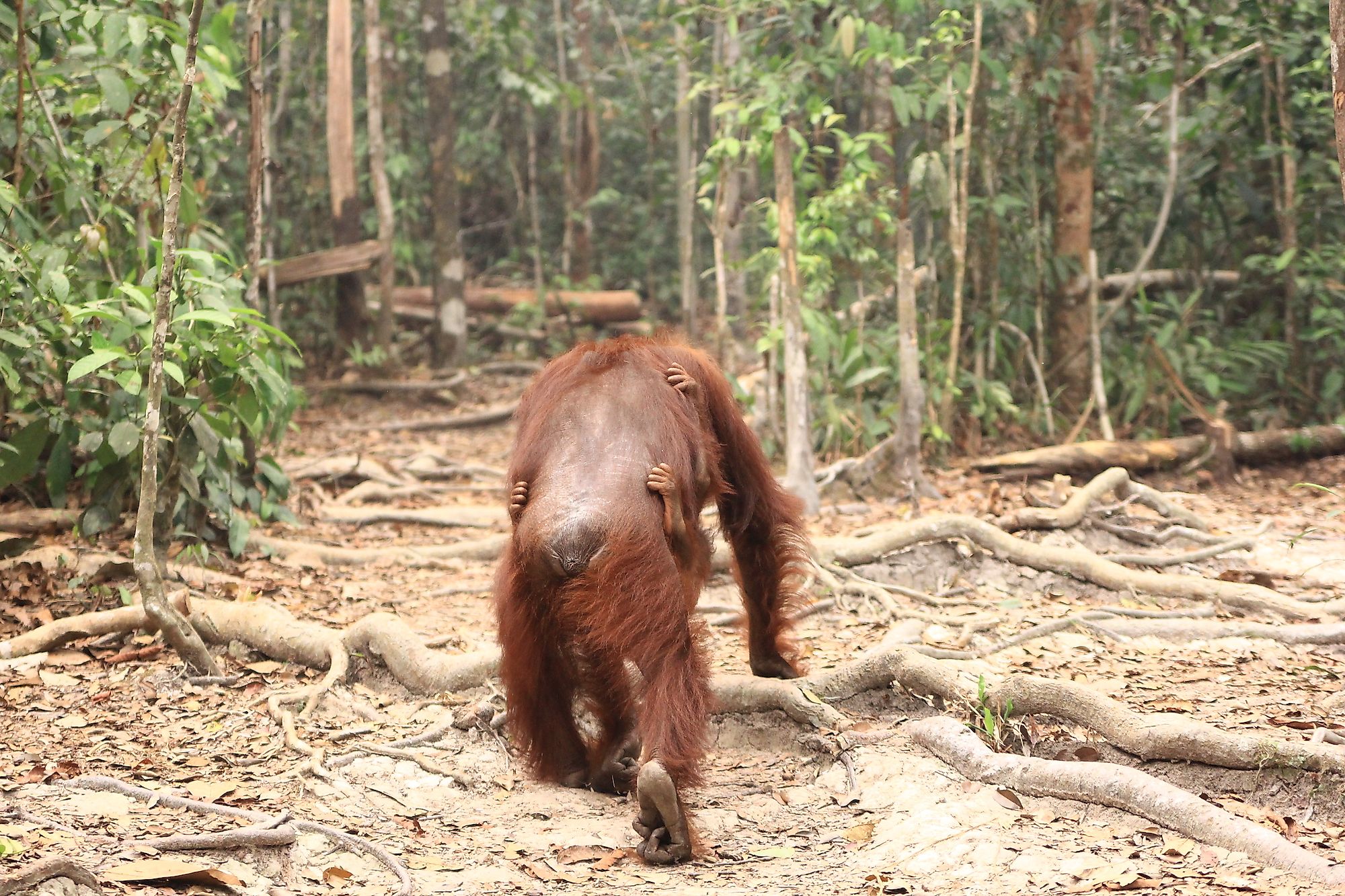
Orangutans are classified as critically endangered animals according to the IUCN Red List. Bornean orangutans have declined by about 25% over the past decade. Researchers have determined that between 1,500 and 2,500 Bornean orangutans are killed annually. Half of that number die as a result of human-wildlife conflict. Such conflicts often occur around areas where agricultural activity is expanding.

Hunting Of Wildlife Is Made Easy

Bearded pigs are an essential source of protein for a significant number of forest-dwelling people. The species has economic and cultural importance for communities living in rural areas in Sumatra, the Malay Peninsula, and Borneo, where it has been a popular source of food for thousands of years. Until recently, the bearded pig was widespread across the Malay Peninsula. During a survey conducted in 2015, direct observation showed the existence of bearded pigs in oil palm plantations. They were seen to feed opportunistically on palm fruits on the ground, an easily accessible and dependable resource. The simplified landscape has, however, meant that they are hunted with relative ease compared to natural forests. As a result, their populations have declined significantly.

Mitigating The Effects Of Oil Palm

The main strategies used in mitigation of the effects of oil palm cultivation on biodiversity revolve around addressing the loss of forests and peatlands. Some of the strategies used to protect these areas include the adoption of certification standards, regulatory policies, and corporate commitments. Conservationists utilize methods in auditing, traceability, and monitoring to realize desired conservation outcomes.

The post How Palm Oil Production Is Endangering Species appeared first on Gradaxis.


source https://gradaxis.com/how-palm-oil-production/

Friday, February 7, 2020

Why Was the Berlin Wall Built, When and Why?

The Berlin Wall Built

The Berlin Wall was built in 1961 to stop an exodus from the eastern, communist part of divided Germany to the more prosperous west. Between 1949 and 1961 more than 2.6 million East Germans, out of a total population of 17 million, had escaped. Many were skilled professionals and their loss was increasingly felt in the German Democratic Republic, or GDR, as it was called.

With the country on the edge of economic and social collapse, the East German government therefore made the decision to close the entire border, and erected the wall overnight, on 13 August 1961. It was often referred to by eastern authorities as the anti-fascist protection barrier, to protect East Germans from the west.

A simplified explanation of the motivations behind the Berlin wall was that it was built to stop East Germans from traveling or escaping to West Germany. After the second world war, Germany had been partitioned into two: the USSR allied East Germany, and the US allied West Germany. By 1948 life in West Germany which had been getting financial help from the US through the Marshall Plan was far better than East Germany. In East Germany, the communist party had taken over power, and had started a brutal campaign of repression and re-education.

Factors that lead to building of the Berlin Wall

When the allies in 1945 defeated the German Reich, it was divided into four zones. Berlin was divided into four sections which were under the joint administration of the four powers (UK, France, US, and USSR). The Soviets wanted total control of the administered zone and worked to towards control of the entire country.

The Partitioning of Germany

Germany was formally split into two in 1949 to form West Germany and East Germany. East Germany was controlled by USSR via the ruling Sozialistische Einheitspartei Deutschlands (SED). SED decided to speed up conversion of the country’s economy to socialism. The SED introduced changes that culminated in an uprising on June 17, 1953, in which the protesters demanded free elections and reunification of the divided Germany. The SED brutally crushed the rebellion with the aid of Soviet troops.

The Great Migration of East Germans to West Germany

After the brutality of SED in putting down the rebellion, there was an upsurge in the numbers of people moving from East Germany to West Germany. By 1961 the situation in the Democratic Republic of Germany had become catastrophic. The country could not afford the brain and labor drain it was experiencing as the healthiest and brightest citizens who were assured of better lives in West Germany continued to leave.

Construction of the Berlin Wall

At midnight on August 13, 1961, East Germany’s police and army began to close the Berlin border; this was completed by morning. The East Germany’s government forces then began to demolish the streets along the border making them impassible to vehicles. By August 17, 1961, construction on a wall made of large concrete blocks began. During the construction, Army units were deployed in front of the construction with instructions to shoot those attempting to cross. By the end of the year, the wall was complete, and a wide expanse cleared to provide a clear line of fire on the would be emigrants. Improvements on the Wall continued until 1980 when the entire wall had been converted to reinforced concrete sections which were 12 feet high and 4 feet wide each. On top of the wall was barbed wire in addition to watchtowers manned with solders having machine guns. By the 1980s, the wall had extended 28 miles through Berlin and covered 75 miles around west Berlin. There were extensive barriers along the border of East and West Germany that covered 850 miles.

The Fall of the Berlin Wall

The demolition of the Berlin Wall began on the evening of November 9, 1989. Over the following weeks, citizens of East Germany began using varied tools to demolish parts of the wall creating unofficial crossing points. Soon afterward the government of East Germany demolished sections of the wall to create ten official crossing points, and by December 22, 1989, it allowed visa-free travel on both sides of the wall. On June 13, 1990, East Germany’s army began official demolition of the wall and completed the job in November 1991 signaling the official reunification of Germany.

Why Was The Berlin Wall Built?

The Berlin Wall was built to separate East and West Germany. After World War II, Germany was partitioned into two: the USSR-allied East Germany, and the US-allied West Germany. The wall was built to stop East Germans from escaping to West Germany.

The post Why Was the Berlin Wall Built, When and Why? appeared first on Gradaxis.


source https://gradaxis.com/the-berlin-wall-built/

The European Union Countries With Most Cats

The European Union Countries With Most Cats

According to data from the European Pet Food Industry (FEDIAF), about 26% of EU households own at least one cat.

Cats are a popular choice in Europe when it comes to pet ownership, although we don’t see them outside as often as their canine friends. As shown in this statistic, Germany and France are the two countries leading the list of cat owners in the EU, with the former’s narrow win. While Germany also ranks as the top EU country with the highest number of pet dogs, cats still win in European households.

Compared with the cat population in Germany, France and the United Kingdom, countries such as Latvia, Ireland and Estonia had a low number of household felines. Yet across Europe in general, the number of cats has gone up significantly since 2010. In 2017, the EU alone was home to a large population of cats, making them the most preferred pets.

Cats are the most popular pets in Europe. According to data from the European Pet Food Industry (FEDIAF), about 26% of EU households own at least one cat, while only 18% of the households own at least one dog. In total, there are approximately 74.4 million cats in the EU compared to just 66.4 million dogs. Germany and France have by far the highest number of cats in the EU, with 14.5 million and 13.5 million cats, respectively. Other countries with a huge cat population include the United Kingdom, Italy, Poland, Romania, Spain, the Netherlands, Belgium, and Austria.

Germany

Pets play a significant role in German society. They are seen to provide balance in the lives of people with hectic and career-focused lives. In some instances, they are viewed as taking the place of a partner or a child. They also help enhance their owner’s wellbeing and quality of life. At least 23% of all German households own a cat. The cat population on record, however, does not include strays whose population could be as high as two million. The stray cat population has become a matter of public concern, and experts have begun advocating the neutering of all stray cats as a means of controlling the population. Appeals have also been made to the federal ministry of agriculture to initiate a debate on the situation. Several small towns have begun adopting the idea of compulsory neutering of stray cats. Some campaigners, including birdwatchers, have suggested that stringent measures should be taken on cat owners for harming biodiversity since cats are responsible for killing about 100 million birds annually.

France

There are 13.5 million cats in French homes. The number of cats in the country has been increasing since 2006 when the cat population was just 10 million. All types of pets, including cats, are protected under French law. There are also rules on the maintenance of pets, including regular vaccination and microchipping. Cat owners are, however, less likely to follow the rules on microchipping compared to dog owners. As a result, a lot of cats end up lost. As a foreigner, it is recommended that one follows all the rules and regulations on keeping a pet.

Italy

Italy is home to 7.5 million cats. In Rome, lovable cats can be found living in ancient monuments around the city. It is estimated that there are about 2,000 colonies in the city that have up to 300,000 cats. The cats have lived in the region for ages and have become an essential part of the town. Rome’s city council recently classified them as the Bio-Heritage of Rome and are now actively protected. The city is also home to Torre Argentina, a large cat sanctuary that takes care of abandoned cats. Currently, the ancient square where Julius Caesar was murdered is not accessible to anyone except a colony of stray cats and volunteers who operate the sanctuary at the south-west corner.

Poland

Poland is considered a cat-friendly nation. The country is currently home to about 6.4 million cats. Cats are allowed into various places, including some cafes and bookstores. People who prefer having a hot beverage and some desserts in the company of cats have the option of visiting cat cafes. In one such café, the Miau café situated in Warsaw, guests enjoy lemonade and play with the cats that live there. Other cat cafes can be found in Lublin and Krakow. Anyone moving to Poland with their cat is expected to microchip and vaccinate their cats against diseases such as rabies. A health certificate is also required when one does not have an EU pet passport.

Romania

Romania has the second-highest per-capita cat ownership in the EU after Hungary. The country is currently home to about 4.3 million cats. Romanians like having companion animals in their homes. According to a recent online survey, nearly half of the people who live in urban areas have cats.

Spain

Spain has 3.15 million cats. Spaniards generally love the company of companion animals. In the Spanish town of Trigueros del Valle, pets or “non-human residents” are accorded equal rights to co-exist alongside their human counterparts. A growing number of people are, however, expressing concern over the large population of feral cats in the country. Residents in areas that have large cat colonies have complained that they are a health risk. The city of Madrid recently introduced the “zero-sacrifice” law, a humane legislative measure that banned the practice of putting down street cats that were deemed a nuisance. Today the stray cat population is controlled through trapping and neutering. Street cats are also dewormed to ensure they are healthy. Residents also do not get upset over disturbance caused by fights between males or females on heat.

Netherlands

There are cats in just about every street in the Netherlands. The cat population in the country is 2.6 million, which means that the ratio of cats to humans is one to six. Cats hold a special place in the hearts of the Dutch. Some places have a special focus on cats, including the De Kattenkabinet, a museum that is dedicated to cats and a canal boat that serves as a cat shelter. Almost all Dutch cities have cat cafes where one can enjoy coffee surrounded by cats rehomed from a shelter.

Belgium

Cats have an interesting and unsettling history in Belgium. The town of Ypres was infamous for the cat throwing festival, a tradition that dates back to the 12th century. On every second day of lent, cats were rounded up and thrown off the city’s bell tower. “Cat Wednesday,” as it was popularly known, is probably the darkest page of the city’s feline history. In another part of the country, namely Liege, cats had a more pleasant and exciting history. In 1876, the Belgium Society for the Elevation of the Domestic Cat trained 37 cats to deliver mail in the city of Liege. Initial trials were successful, but the idea did not take off. Today, there are about 2.05 million cats in Belgium. They are treasured companions for a significant number of people in the country. The country recently passed laws requiring that cats should be sterilized to help control the stray cat population.

Austria 

Austria is home to 2.03 million cats. Austrians love cats, and the country is generally considered cat-friendly.

Cat Welfare In The EU

Since 1974, the EU has progressively passed legislation on animal welfare. The welfare of pets, including cats, is covered under the European Convention for the Protection of Pet Animals. Currently, there is little EU legislation that protects cats and dogs from commercial practices. Member states have varying levels of legislation on the matter, which leaves considerable room for those looking to violate animal rights. Some pet owners have been calling for more robust laws that better protect companion animals. Those championing the cause believe that there should be more comprehensive and harmonized laws across all EU member states.

The European Union Countries With Most Cats

Rank Country Number of cats in thousands
1 Germany 14,500
2 France 13,500
3 Italy 7,300
4 Poland 6,400
5 Romania 4,300
6 Spain 3,145
7 Netherlands 2,640
8 Belgium 2,050
9 Austria 2,034


The Berlin Wall Fall, When and Why?

The Berlin Wall Fall

West Germany and East Germany were divided until the fall of the Berlin Wall on November 9, 1989.

At the end of the Second World War, Germany was divided into four zones of occupation under the control of the United States, Britain, France and the Soviet Union. Berlin, although located within the Soviet zone, was also split amongst the four powers. The American, British and French sectors would form West Berlin and the Soviet sector became East Berlin. The division of Germany and the nature of its occupation had been confirmed by the Allied leaders at the Potsdam Conference, held between 17 July and 2 August 1945.

The Berlin Wall was erected in 1961 with the purpose of separating East Berlin/East Germany and West Berlin/West Germany. The wall covered a length of 155 km (96.3 mi) and existed for 28 years. The fall of the Berlin Wall occurred on November 9, 1989.The process of German reunification began the following year in 1990. Portions of the Berlin Wall still exists today as a reminder of the country’s history. 

Why Was the Berlin Wall Built?

The United States, Great Britain, the Soviet Union, and France formed the Allied powers that conquered Germany after the end of World War II. These Allied powers divided Germany as well as its capital city Berlin into four zones. However, the Soviet Union’s relationship with the three other powers quickly disintegrated. For instance, in 1948, the Soviet Union blocked all supplies from reaching West Berlin, a case which came to be referred to as the Berlin Blockade.

In 1949, the three regions of Germany occupied by Great Britain, United States and France united to form the Federal Republic of Germany or West Germany. The region taken up by the Soviet Union made up East Germany or the GDR. Construction of the wall began on August 13, 1961. The Berlin wall which stood for 28 years underwent four significant transformations in its construction. Starting August 13, 1961, a barbed wire fence was raised with concrete posts. The fence was replaced three days later by concrete blocks topped with barbed wire to make it more permanent and sturdier. In 1965, steel girdles were used to support the concrete. In 1975-1980, concrete slabs were added on the wall making it more thorough and complicated. The Berlin wall was about 91 miles in length, twelve feet high, and four feet wide. The top of the wall consisted of an enormous pipe which made it impossible for it to be climbed.

The Fall of the Berlin Wall

The fall of the wall of Berlin began on November 9, 1989 when the wall was officially opened following the Cold War that had thawed in many parts of Eastern Germany. The Cold War forced the head of the East German communist party to review the relationships of his city with regions in the West. The leader announced that citizen of the FDR and the GDR were free to cross the border at any time. Upon this announcement, crowds swarmed the wall from both sides of the wall. Some crossed freely while others came with picks and hammers and began chipping the wall away. The wall was chipped into pieces that have been conserved in homes and museums. Some of the collectibles on the wall are conserved in the Berlin wall memorial Bernauer state. A month later, citizens of East and West Germany were able to cross the wall freely without needing visas. The fall of the wall of Berlin was the first step towards the unification of Germany which occurred on October 3, 1990. The official demolition of the wall began on June 13, 1990 and was completed in 1992.

When Were West Germany and East Germany Divided?

West Germany and East Germany were divided until the fall of the Berlin Wall on November 9, 1989.


The Curvature Of The Earth From A top Mount Everest

The Curvature Of The Earth From Atop Mount Everest

Studies place the threshold altitude for seeing Earth’s curvature at about 35,000 feet.

Obviously space, or very high altitude, is your best bet. Unfortunately however, although space tourism is edging ever closer, it’s still not quite here which means that we can rule out that particular vantage point at least for the time being. Until a decade or so ago, Concorde was the next best thing. I took the above photo from a British Airways Concorde at about 58,000 feet on a “trip to nowhere.” It was taken with my brother’s old Pentax SLR and a standard 30mm (ish!) lens. Pressing my nose against the aircraft’s window and gazing from side to side, the curve was even more pronounced than the photo suggests, but these days I have to settle for those pictures to assure myself that BoB is mistaken.

Although Concorde no longer flies, there are similar aviation opportunities using retired military fighter aircraft in Moscow. Sadly, they make Concorde look like a bargain which means that most of us must turn to more terrestrial alternatives. But is it possible to view the curvature of the Earth without taking to the sky?

When I was in Chile a short while ago, I met a couple from California who had started their travels on Easter Island. They claimed that while standing on a particularly high point and gazing out at the endless ocean, they could clearly make out the curvature of the Earth with their naked eyes. Many of us have had similar experiences when perched on cliff tops and looking seaward, but is it just our minds playing wishful tricks?

Earth curves at about 8 inches per mile, but the distance one can see depends on height. For a six-foot-tall person, the curvature is approximately 3 miles away. This is a geometrical finding since the human eye cannot see a 24-inch curve from 3 miles away. Studies place the threshold altitude for seeing Earth’s curvature at about 35,000 feet. Even at this height, it is difficult to discern the curve as the observer requires a wide-angle of view. Since the distance of the horizon depends on the length of a person, it is possible to see the Earth’s curvature while standing on a raised position. For a person standing at the summit of Mount Everest, which is about 29,029 feet, the horizon is approximately 230 miles away. On a clear day, it is possible to see such a distance, but 230 miles is not enough for the human eye to discern an expansive curvature like that of the Earth. It is, therefore, possible to see the horizon from the top of Mount Everest but not Earth’s curvature. If we consider the effect of refraction, the horizon appears even further. Cold weather raises the atmospheric refraction making it possible for people in colder regions to see further. Secondly, clouds hover above the ground level and can be seen further than the surface. As much as the weather aids our view, it can also distort it. Precipitation and fog scatter light, making it impossible to see features visible on a clear day.

Photographing The Curvature

There are thousands of photographs on the internet of people claiming to have photographed the curvature of the Earth. Scientists have dismissed these photographs as fake or misrepresented. In almost every scenario, the curvature is caused by the distortion of the camera lens. If one lifts a camera above the center of the frame, then the right and left edges curve inwards to mimic Earth’s curvature.

Where Can You See The Earth’s Curvature?

The Earth curves at about 8 inches for every mile, but this distance is too minimal for a human being to discern the curvature. Even while on top of Mount Everest, it is impossible to see the curvature. Studies place the threshold to see the curvature at 35,000 feet, but even at this height, one must have at least a 60° angle of vision. Very few commercial flights make it to such heights, and therefore the Earth’s curvature is out of reach for many people. The best place to see the curve is in space. Astronomers in the International Space Station can not only see Earth’s curvature but also its spherical shape.


The Great Wall of China Built, When and Why?

the Great Wall of China Built

The Great Wall of China was not built all at one time. In 7th and 8th century BC, battles happened frequently among the states of the Spring-Autumn and Warring States dynasty and in order to defend themselves they began to built walls and towers on the borders. It was the state Chu who first built the wall. It was during the Qin Dynasty that the kingdom of Qin united the different parts into one empire. To defend off the invasions from northern invaders, Emperor Qin Shi Huang had all the walls joined up. Thus, the Great Wall came into being.

Since then, the Great Wall was rebuilt, modified or extended throughout Chinese history for over 2,000 years by millions of Chinese people drafted in for the task. The primary purpose was always to protect the Chinese Empire from the Mongolians and other invaders. Most of the current Great Wall we see today was built in the Ming Dynasty (1368-1644) and is approximately 6000km long.

Stretching about 13,170 miles from east to west, the Great Wall of China is one of the greatest wonders of the world. The wall which stretches up and down across plateaus, grasslands, deserts, and mountains was listed in 1987 as a World Heritage Site by UNESCO. The Great Wall comprises of many walls some of them running parallel to each other. The Great Wall has a history of over 2,000 years, but some of its sections have either disappeared or are now in ruins. Nonetheless, China’s Great Wall remains one of the fascinating attractions in the world due to its historical significance and architectural magnificence.

The Great Wall of China was built to protect China from its enemies and invaders from the North, especially the Mongols. The Mongols were a tribal group that would regularly conduct raids into China. Despite the wall, the Mongols eventually conquered China. The Wall also kept Chinese citizens from leaving China.

Actually, China is not the only country in history that built wall along its boundary. Athens, the Roman Empire, Denmark and Korea all did so at certain time in the past. The Hadrian锟斤拷s Wall in northern England, built “to separate the Romans from the barbarians”, extended 117 kilometres from Wallsend-on-Tyne in the east to Bowness-on-Solway  in the west. All the walls were built for the purpose of military defense, and the Great Wall of China was no exception. 

History of the Great Wall of China

The Great Wall of China was constructed over a long period and not all at once. Between the 6th and 7th centuries BC, there were frequent wars that were fought between different warring States dynasty and the Spring-Autumn states. The walls and towers were constructed along the borders to serve in self-defense. The state of Chu was the first to build the wall. During the reign of the Qin dynasty, different parts of the empire were united into one. For the empire to protect itself from invaders from the North, Emperor Qin Shi Huang ordered for all the walls that had been built to be connected thus becoming the Great Wall of China. Ever since the wall has not only been reconstructed and modified but also extended throughout the history of the republic. For more than 2,000 years, millions of the Chinese people have helped remodify and rebuild the wall. The main aim of constructing the wall was to always defend the empire from invaders such as the Mongols among others. A huge portion of China’s Great Wall was constructed during the Ming Dynasty somewhere between the years of 1368 and 1644.

The Reasons Behind the Construction of the Great Wall of China

The wall was constructed to protect China from its enemies and the northern invaders most likely the Mongols who were a tribal group that carried out raids in the region. Although the wall was constructed, the region was still conquered by the Mongols eventually. The Great Wall was also used for keeping the Chinese citizens from leaving the country. Historically, China is not the only country to build a wall along its borders, other countries including Korea, the Roman Empire, Athens, and Denmark built walls. All these walls were built to defend their territories. However, the Chinese’s Great Wall was perhaps the extreme project for military defense in history, and it also guaranteed the peace and stability of agriculture to the ancient society.

Who built the Great Wall of China?

For more than 2,000 years the wall served as a powerful means of protection in the history of China following battles between nomadic and agricultural economies. The Great Wall protected both the cultural progress and economic development through safe guarding trading routes such as the Silk Road and securing transportation together with the transmission of information. Millions of people constructed the Great Wall of China over time. The labor force that worked on the wall comprised of war prisoners, slaves, workers, soldiers, convicts, and peasants who had been recruited forcefully. It is believed the Emperor Qin Shu Huang ordered about one million people to join the construction of the Great Wall. According to the Qin Dynasty laws, prisoners were required to work on the wall for four years. It is also believed that many people died while building the wall either out of fatigue or starvation.

Why Was The Great Wall Of China Built?

Stretching about 13,170 miles from east to west, the Great Wall of China is one of the greatest wonders of the world. The wall was built over centuries by different dynasties. However the purpose of the wall was for self-defense, particularly from the Mongols.

The post The Great Wall of China Built, When and Why? appeared first on Gradaxis.


source https://gradaxis.com/the-great-wall-of-china/

Facts About the Great Pyramid Of Giza

the Great Pyramid

The Great Pyramid of Giza was built as a tomb for the Egyptian pharaoh Khufu. It took approximately 20 years to build and has three burial chambers inside. When it was originally built (in approximately 2550 BC) it was almost 147 meters tall. Today, because of erosion, it is only about 139 meters tall. If you visit Egypt today you can enter the Great Pyramid through the Robbers’ Tunnel.

The Great Pyramid is a defining symbol and landmark in Egypt. It is the oldest and largest pyramid in the Giza pyramid complex located in the Giza Plateau near Cairo. The other two pyramids are the Pyramid of Khafre and the Pyramid of Menkaure. Although the Great Pyramid has been excavated and studied for years, the purpose of its construction is still a subject of debate. Below are some of the facts about this human-made wonder in Egypt.

It was constructed during the reign of King Khufu

The pyramid was constructed during the reign of King Khufu (2589-2566 BCE). Shortly after coming to power, the king set out to build his grand tomb upon which he would be buried. He also constructed other pyramids for his queens nearby.

The other two pyramids are for Khufu’s son and grandson

The Great Pyramid is just one of the three major pyramids in Giza. The middle pyramid is the Pyramid of Khafre which was built for Khafre (Khufu’s son). It is the second-tallest pyramid in Giza. The third and the smallest pyramid is the Pyramid of Menkaure (Menkaure was Khafre’s son)

Constructed over 20 years

According to the Egyptologist, it took about 20 years for the Great Pyramid to be completed. The Greek historian Herodotus posited that the work required 100,000 laborers who were divided into five zaa of 20,000 men each. However, recent evidence shows that the work required a workforce of 14,500-40,000 men.

The Great Pyramid may have been for a different purpose other than the tomb

Although it is widely belied that this landmark structure was constructed as the final resting place for king when he finally dies, some scholars argue that it was not a tomb as no mummies or graves have ever been found there. Studies are still ongoing to determine the exact use of the pyramid.

Tallest human-made structure for 3,800 years

The pyramid was the tallest structure made by human for a record 3,800 years until the completion of the Lincoln Cathedral (England) in 1300 CE. The pyramid is 479-foot and has a base of 754 feet. However, other scholars point to Eiffel Tower completed in 1889 CE as the structure that first surpassed the pyramid.

The Pyramid is surrounded by several other structures

The pyramid is surrounded by several structures, including smaller pyramids. The tomb of Khufu’s mother, Queen Hetepheres is also nearby. The pyramid is also surrounded by mastabas where the king’s officials and relatives were buried to accompany and support the king in the afterlife

Over 2 million blocks of stones used in the construction

The Egyptian monument comprises up to 2.5 million blocks of stones some of which are huge and immense, especially the granites in the King’s Chamber. One can only wonder how such immense stones raised and positioned in their place.

Sir William Flinders was the first person to excavate the pyramid

Sir William Mathew Flinders was the first person to use modern techniques and scientific analysis to excavate the pyramid. The British archaeologist first excavated the pyramid in 1880 CE, setting the standard for archaeological operations in Egypt, particularly Giza.

The Great Pyramid has three known chambers

The pyramid has three known chambers; Grand Gallery, Queen’s Chamber, and the King’s Chamber. The Grand Gallery was cut into bedrock and remained unfinished while the King’s and Queen’s chambers are higher up within the structure.

It is unclear how the Great Pyramid was constructed

There are many conflicting theories on how the pyramid was constructed. While some people believe that the blocks were dragged into place, others believe that they were either rolled or lifted. The structure may have been built by ancient Egyptians but the Greeks believe that it was constructed by the slaves.

Interesting Great Pyramid of Giza Facts:
The Great Pyramid of Giza is the oldest of all Seven Wonders of the World.
This pyramid is the largest of all three pyramids that border El Giza, Egypt and it is also the largest pyramid ever built.
The pyramid was built with about 2.3 million stone blocks and it is thought to weigh 5.9 million tonnes.
The ancient name of the Great Pyramid of Giza was Khufu’s Horizon.
This pyramid is the only one in Egypt known to have passages inside that go up and go down. If you wanted to visit the king’s chamber you would have to walk down, all the way, bent over.
The Great Pyramid of Giza once had a swivel door at the entrance. It weighed about 20 tonnes and could easily be pushed open from the inside. On the outside it was very hard to find because it fit perfectly. There are only two other pyramids known to have had swivel doors. One was Khufu’s father’s pyramid and the other was his grandfather’s pyramid.
The mortar that was used to build the pyramid cannot be reproduced today. Even though it has been analyzed they still can’t make it. It is stronger than the stone that was used to build the pyramid and is still in place today.
There has been no writing or hieroglyphics found inside the Great Pyramid of Giza.
This pyramid is the only one to have been built with concave sides. This means that all four side curve in slightly.
If we tried to build an exact replica of this pyramid it would not be possible. We do not have the precise technology that the ancient Egyptians had that was necessary to build this pyramid.
There were three burial chambers inside. One of the chambers was built into the bedrock underground. The queen’s chamber was higher and the king’s chamber was the highest. Khufu didn’t intend to use the queen’s chamber for any of his wives. It is thought that he intended to use it for a statue of himself.

The post Facts About the Great Pyramid Of Giza appeared first on Gradaxis.


source https://gradaxis.com/the-great-pyramid-of-giza/

Thursday, February 6, 2020

What is a Kleptocracy?

What is a Kleptocracy

Kleptocracy is term referring to corrupt government leaders who embezzle public funds for their own political and self gain.

Kleptocracy is a government with corrupt leaders that use their power to exploit the people and natural resources of their own territory in order to extend their personal wealth and political powers. Typically, this system involves embezzlement of funds at the expense of the wider population.

Kleptocracy is different from a plutocracy (society that is ruled or controlled by people of great wealth or income) and oligarchy (a form of power structure in which power rests with a small number of people distinguished by wealth, education, religious status etc.). A kleptocracy is a government ruled by corrupt politicians who use their political power to receive kickbacks, bribes, and special favors at the expense of the populace, or simply direct state resources to themselves, relatives or associates. Kleptocrats may use political leverage to pass laws that enrich them or their constituents and they usually circumvent the rule of law.

Kleptocracy is a term with negative connotations, used to define a form of leadership where senior government officials use their authority to embezzle public funds for self-gain and to solidify their political prominence. Kleptocracy is often practiced under autocratic governments where external supervision is mostly non-existent, and therefore the disbursement and use of public funds are dictated by the nation’s leadership. These corrupt government officials use the funds meant for the development of the country, for personal gain.

There are numerous examples of such governments around the world, where the nation’s leadership has accumulated mind-boggling amounts of wealth at the expense of the majority of the citizens. Kleptocracies are closely associated with military juntas, oligarchies, dictatorships, and other types of nepotism or autocratic regimes, where external oversight is nonexistent or is impossible. The absence of monitoring could be worsened by the corrupt officials who control the supply and means of distribution of public funds. Kleptocratic leaders treat the county’s resources as personal items and spend them on luxuries and extravagance, and many of them transfer the country’s funds to secret accounts in foreign countries.

Kleptocracy in Russia

Russia is often pointed out as an example of a modern kleptocracy, and the nation’s current president, Vladimir Putin is described as the “true definition of a kleptocratic leader.” While the astronomical rise of Vladimir Putin to the Russian political summit was fueled by promises of removing all oligarchies in the country, the president would later take up kleptocratic tendencies on attaining the presidency and began amassing wealth. In Putin’s regime, an estimated 35% of the country’s wealth is controlled by 110 people. Interestingly, the majority of these individuals are acquaintances and relatives of the president. President Vladimir Putin is himself believed to own assets worth $200 billion.

While corruption had always been a problem in Russia, the vice worsened during Putin’s presidency, with the country’s rank in the Corruption Perception Index plummeting to the 131st position out of 176 countries. Kleptocracy has been most profound during Putin’s second term as president where vices such as corruption and nepotism have been rampant in government. The president has been accused of misappropriating public funds, with his close friends and relatives benefiting from the unlawful budgetary expenditure. Critics believe that of the $50 billion used by Russia to host the 2014 Winter Olympics, half of it was used in making irregular payments to Putin’s associates.

Kleptocracy in Africa

Africa has many of the world’s kleptocratic leaders, who have driven their economies into ruin. Not surprising is the fact that most of Africa’s kleptocratic leaders ascended to their positions through military coups, and established autocratic governments. There is a common trend in Africa where the poorest and least developed countries are often kleptocracies, and illiterate people make up a large percentage of their respective populations. Many such African countries are endowed with natural resources such as precious metals and fossil fuels. Some scholars believe that foreign interference has had a responsibility in the establishing and thriving of kleptocracies in Africa, particularly in the 20th century.

Former Zaire (present-day Democratic Republic of Congo) leader, President Mobutu Sese Seko was among the most corrupt leaders of the 20th century. Under Mobutu’s leadership, Zaire’s economy had all but collapsed and experienced unprecedented hyperinflation. Zimbabwe’s longest-serving head of state, former president Robert Mugabe was a well-known kleptocrat. President Mugabe’s nepotism would ultimately become his undoing and led to his downfall. While democracies have replaced many former kleptocracies in Africa, the vice still lingers in the continent. Some see the South African government as a kleptocracy, and President Zuma has earned the reputation of engaging in nepotism, dishing out favors to his acquaintances. Another well-known kleptocrat in modern Africa is Uganda’s President Yoweri Museveni.

In 2011, South Sudan gained independence as a Kleptocratic nation. It was a militarized state characterized by profound corruption in its governance such that by the time it was independent, the political atmosphere was extremely expensive, and its revenue was all consumed by the military and the political patronage, and there was nothing left for institutional building, public services, or development. The shutdown of oil production in 2012, bankrupted the nation and whole systems in the country collapsed

Kleptocracy in the United States

The United States has often been portrayed as the model of true democracy, but surprisingly the American government has in recent years been labeled as a kleptocracy. President Donald Trump has been a polarizing figure in American politics, with his leadership style endearing him to some and earning him critics in equal measure. However, the fact remains that President Trump shares characteristics of other well-known kleptocratic leaders, with nepotism being manifested in the making of significant appointments during his presidency.

Since the beginning of his term, President Trump has been accused of muzzling the press and dishing out favors to family members and close friends. For instance, the president appointed Jared Kushner, his son-in-law, to a prime position in the White House. Many people felt Kushner was unqualified to serve as America’s Middle East envoy, but the president threatened media houses that raised the issue.

While the president is yet to do something that is explicitly outlawed by US laws, some of his actions on which Americans turn a blind eye, were unthinkable a few years ago. But President Trump did not start making such questionable appointments during his presidency. While still on the campaign trail, Donald Trump appointed Donald Trump Jr as his top campaign adviser, a position in which he had little experience. President Trump is also remembered for appointing, Ivana Trump, the daughter with his ex-wife, to manage Trump Castle casino regardless of her inexperience, and later hired her as a presidential advisor. Trump also hired the unequally inexperienced brother Robert Trump for the development of Trump Taj Mahal, a casino which soon went bankrupt.

The US constitution makes it impossible for President Trump to become a true kleptocrat, capable of appointing his wife as Vice President. However, such kleptocratic characteristics like nepotism are not exclusive to the Trump administration. President John F Kennedy infamously appointed his brother, Robert as the nation’s attorney general, a move that was met with bitter criticism.

Narco-economies

Narcokleptocracy, also known as narco-states or narco-economies, are nations where drug money has compromised the integrity of the government through the bribing of senior government officials. Using their bottomless accounts drug barons force the government to allow the illegal drug trade to be conducted within the country. Some countries that have been defined as narco-economies include Guinea-Bissau, Panama, Tajikistan, and Venezuela. Narco-economies share many characteristics of kleptocracies, since very few individuals holding influential positions in government, control most of the country’s wealth and leaving the majority to languish in poverty.

Effects of Kleptocracy

The funds misappropriated by kleptocratic regimes are meant for the provision of essential social services such as in health, education, food, and water. Therefore, the majority of the citizenry in such countries lives in deplorable conditions and lack basic amenities. Only a few individuals in senior government positions and their associates benefit from kleptocracies often through dealing with corrupt activities.

Kleptocracies often have a terrible reputation in the international scene, and hence lack foreign investments and therefore weaken the cross-border trade and the domestic market. Kleptocratic leaders misuse funds obtained from tax payments and engage in money laundering, which adversely affects the quality of life of the citizens in the whole country.

Net Worth of Some Kleptocratic Leaders

Transparency International, a German NGO that tries to fight corruption released in 2004 the list of the most corrupt and self-enriching leaders in the world and the amount of wealth they have amassed in US dollars. At the top of the list at the time was Suharto, the former president of Indonesia, who was estimated to have acquired wealth worth between $15 billion and $35 billion. Suharto was named the most corrupt world leader, and he made his family members and friends the heads of the state-run monopolies, and they, in turn, kicked back millions of dollars in tribute payments.

The second on the list was the former president of Philippines, Ferdinand Marcos who amassed wealth worth $10 billion by 1986, which was equivalent to $21.6 billion in 2014 rates. Marcos was known for running the most corrupt and undemocratic regimes in recent times from 1966 to 1986. In 1972, he passed the Martial law and made his wife Imelda an official who would appoint relatives and cronies to industrial positions and lucrative government jobs. He adopted Crony capitalism where private businesses were seized and handed to friends and relatives.

The third on the list was the former president of Zaire Mobutu Sese Seko a despot and kleptocrat who amassed wealth worth $5 billion. Other leaders on the list include Sani Abacha the former president of Nigeria who looted wealth from the country in the range of $2 billion to $5 billion. Former president of Yugoslavia Slobodan Milosevic amassed wealth worth $1 billion. Jean-Claude Duvalier the former leader of Haiti, who was also known as Baby Doc is thought to have looted to the tune of between $300 million and $800 million.