Monday, December 16, 2019

The Most Popular Sports in the World

​It is estimated that more than half of the global population consider themselves association football (soccer) followers.
Sports are played all over the world, whether as hobbies, careers, or as a part of fitness regimens. Various games have grown in popularity to amass a huge following across the world. The rules and characteristics of these games are dynamic and are governed by international bodies.
Most of these sports are included in the Olympic Games, where different countries from all around the world compete against each other. The sports are also lucrative industries, generating billions of dollars in revenues, especially in developed countries.

10. Golf - 450 Million Fans

Golf has an estimated global following of 450 Million people, and its primary influence is in Western Europe, East Asia, and North America. Golf is played by use of different clubs to hit a ball, over a determined course, using the fewest possible amount of strokes. The modern sport was first played in Scotland from where it spread to the UK and to the rest of the world.

9. Rugby - 475 Million Fans

Rugby has its primary sphere of influence in the United Kingdom and Commonwealth, and an estimated global following of 475 Million people. The foundation of the modern day sport was laid out in medieval England. From the UK, it spread to British colonies such as Australia and New Zealand. The sport is played by two teams of 15 players each, who carry, kick or pass a ball across the end line to score points.

8. Baseball - 500 Million Fans

Baseball has an estimated 500 million global followers and enjoys its highest levels of popularity in the United States, the Caribbean, and Japan. The sport is a bat and ball sport involving two teams of nine players each, who participate in batting and fielding to earn points. Different versions of the sport were played in the US before it gained nationwide popularity in the 19th Century. From the US, the sport spread to other parts of the world and evolved to the modern game as played today.

7. Basketball - 825 Million Fans

Basketball boasts of having an estimated 825 million followers worldwide, and a global sphere of influence. The sport was invented by Dr. James Naismith in 1891 in Massachusetts, United States. He created it as an alternative to football since the sport could be played indoors and had less potential to cause accidents. The sport is played by two teams of five players each, where the goal is to successfully shoot the ball through a hoop elevated 10 feet from the ground.

6. Table Tennis - 875 Million Fans

Table Tennis enjoys a global sphere of influence and has an estimated 875 million followers worldwide. The sport began in the 19th Century in England as a miniature version of the sports lawn tennis. The sport became widely referred to as "Ping Pong". The modern sport involves two teams of between two to four players, hitting a lightweight ball over a net on a hard table, by use of rackets. Formidable global countries in the sport include South Korea, Sweden, and China.

5. Volleyball - 900 Million Fans

The primary influence of volleyball is seen in Western Europe and North America, and the sport has an estimated global following of 900 million fans. The sport was invented in the US by William G. Morgan in 1895. He was part of the Young Men’s Christian Association as an instructor, and he borrowed from basketball, tennis, handball and baseball’s elements. The sport has evolved over the years to the modern day sport, characterized by two teams of 6 players each who throw a ball over a net.

4. Tennis - 1 Billion Fans

Tennis has an estimated global following of 1 billion fans and a global sphere of influence. Different versions of the sport are believed to have been played by the Egyptians, Romans and the Greeks, although the modern sport was first popularized in France. From France, it spread to other parts of Europe and eventually to the whole world. The sport is played by two teams of either one or two players each and involves bouncing a ball over a net by use of tennis rackets. Points are earned when the opponent does not throw back the ball in the predetermined dimensions of the rectangular court.

3. Field Hockey - 2 Billion Fans

Field hockey has an estimated global following of 2 billion fans and sees its primary sphere of influence in Europe, Africa, Asia, and Australia. The contemporary field hockey sport was first played in England in the 1800s. The game is mostly similar to soccer except that the players use sticks to drive the ball instead of feet. The sport is widely played in India, Australia, and Pakistan, whose teams are formidable on the in the sport.

2. Cricket - 2.5 Billion Fans

Cricket has a 2.5 billion person estimated global following, and its primary sphere of influence is in the United Kingdom and Commonwealth countries. The cradle of the sport was the 16th Century England and it was made a national sport in the 18th Century in the country. The sport is characterized by two teams of eleven players each, where each team attempts to score the most runs. The sport is overwhelmingly popular in former British colonies such as India, Sri Lanka, Bangladesh, Pakistan, and Australia.

1. Association Football (Soccer) - 4 Billion Fans

Association football, or soccer, is the most popular sport in the world. It is estimated that more than half of the world's population consider themselves to be association football (soccer) fans. The sport enjoys an estimated 4.0 billion person following, and a global sphere of influence. Ancient soccer has been traced to China, as early as the 2nd Century. The Romans, Greeks, and Japanese have also been thought as possible first players of the sport. Contemporary soccer began in England, where it amassed considerable interest and spread to other parts of the world. The sport is more popular in Europe and Americas than in any other continent. The sport is characterized by two teams of eleven player and two goals. The objective of the sport is to drive a ball into the goal defended by the opponent team.

What's the Most Popular Sport in the World?

Football, or soccer, is the world's most popular sport. It is estimated that more than half of the global population consider themselves association football fans.

​What Are The Most Popular Sports In The World?

Rank Sport Estimated Global Following Primary Sphere of Influence
1 Soccer (Association Football) 4.0 Billion Globally
2 Cricket 2.5 Billion UK and Commonwealth
3 Field Hockey 2 Billion Europe, Africa, Asia, and Australia
4 Tennis 1 Billion Globally
5 Volleyball 900 Million Western Europe and North America
6 Table Tennis 875 Million Globally
7 Basketball 825 Million Globally
8 Baseball 500 Million United States, Caribbean, and Japan
9 Rugby 475 Million UK and Commonwealth
10 Golf 450 Million Western Europe, East Asia, and North America

The Most Dangerous Cities in the World

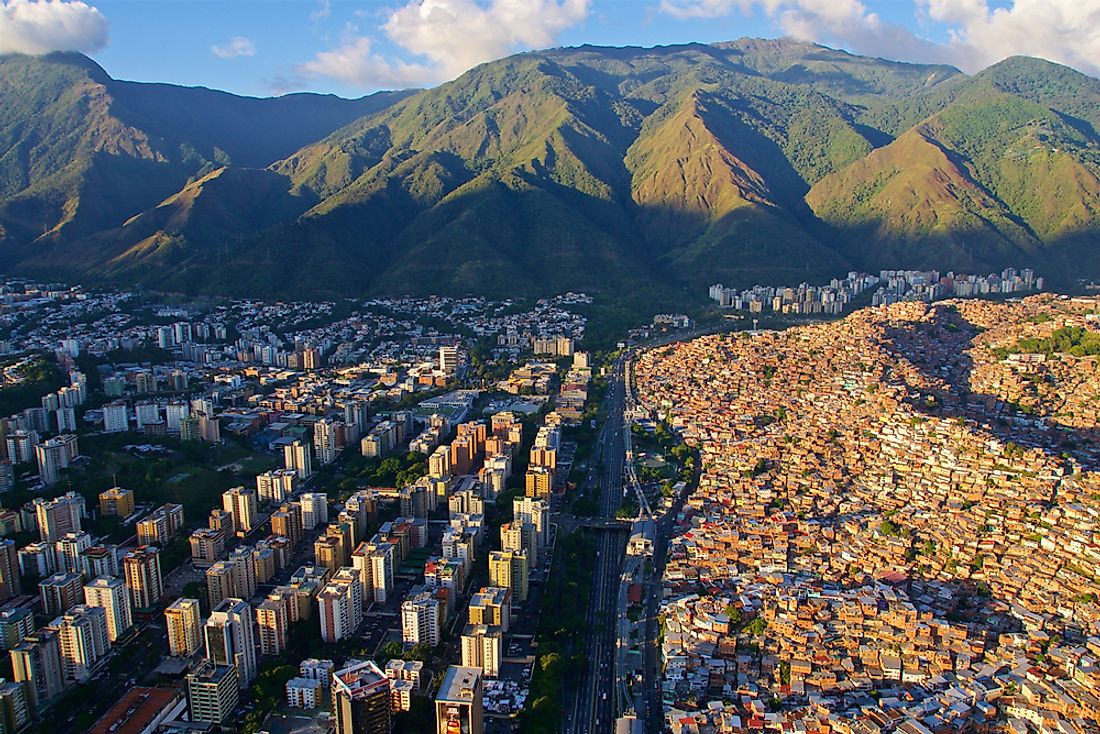
Los Cabos, Mexico is the world's most dangerous city with a murder rate of 111.33 per 100,000 inhabitants.
When planning your next trip, you may want to avoid some of the cities we are about to mention. In 2017, they ranked among the world’s most dangerous places on the basis of murder cases per capita.

The World’s Most Dangerous Cities

Los Cabos, Mexico is the most dangerous city in the world with a murder rate of 111.33 per 100,000 people. This city's position on the list of the world's most dangerous cities is indicative of the increase in crime that Mexico has experienced over the last year. In 2017 and 2018, the resort town of Los Cabos has made headlines news for a string of alarming murders. The majority of the violence in Los Cabos has mostly been related to the drug trade, and tourists have not been the target. Nonetheless, the instances of violence are still drastic, and have earned the popular vacation destination a spot on the top of the list of the world's most dangerous cities.
Caracas, Venezuela, is the second most dangerous city in the world. With 111.19 murders per 100,000 people, it formerly claimed the top spot. In third place is Acapulco, Mexico, with 106.63 murders per 100,000 people. Violence brought on by drug trafficking and organized gangs have been blamed for the relentless violence in these cities, although the factors are generally quite complicated. Unfortunately, none of these cities are strangers to the top three positions, except for maybe the resort town of Acapulco, where violence from other regions of the country has been spilling into in recent years.

The Most Dangerous Cities in the United States

Four cities in the United States are counted among the world's most dangerous. The cities are, in descending order of homicide rates, St. Louis, Missouri (65.83), Baltimore, Maryland (55.48), New Orleans, Louisiana (40.10) and Detroit, Michigan (39.69). In the United States, the relaxed laws surrounding gun ownership is often a subject of much debate. In the United States, gun violence is responsible for tens of thousands of deaths nationwide annually.
One city that is a notable omission from the list is Chicago. Although the city of Chicago has had a reputation for crime in recent years, its homicide rate is 27.22 murders per 100,000 residents. It is important to note that although the city of Chicago experienced an overall decrease in violent crime in the early 2000s, as of the 2010s crime again seems to be on the rise. A full report of the most dangerous cities in the United States can be found here.

Latin American Cities

Of the entries on this list, many cities can be found in a region of the world known as Latin America. Latin America generally refers to countries in Central and South America, where the predominant language is Spanish (or in the case of Brazil, Portuguese). The factors for the dominance of these countries are varied and complicated. Violence related to drug trafficking and income inequality, corrupt politicians and officials, and residue from a history of brutal colonialism have all been indicated as factors that encourage violence.

South African Cities

Three cities in South Africa also make it to the list of the world's most dangerous cities: Cape Town (62.25), Durban (38.12), and Nelson Mandela Bay (Port Elizabeth) (37.53). South Africa, which occupies the southernmost part of the massive African continent, has often garnered publicity for its high crime rates, including murder rates. Factors such as high unemployment rates and systemic racism have been blamed for the violent trends in South African cities.

Where is the Most Dangerous City in the World?

Los Cabos, Mexico is the world's most dangerous city with a murder rate of 111.33 per 100,000 inhabitants.

The 50 Most Dangerous Cities

RankCityCountryHomicide Rate (Per 100,000)
1Los CabosMexico111.33
2CaracasVenezuela111.19
3AcapulcoMexico106.63
4NatalBrazil102.56
5TijuanaMexico100.77
6La Paz Mexico84.79
7FortalezaBrazil83.48
8Ciudad VictoriaMexico83.32
9Ciudad GuyanaVenezuela80.28
10BelemBrazil71.38
11Vitoria da ConquistaBrazil70.26
12CuliacanMexico70.10
13St. LouisUnited States65.83
14Maceio Brazil63.94
15Cape Town South Africa62.25
16KingstonJamaica59.71
17San SalvadorEl Salvador 59.06
18Aracaju Brazil58.88
19Feira de Santana Brazil58.81
20Ciudad JuárezMexico56.16
21BaltimoreUnited States55.48
22Recife Brazil54.96
23MaturinVenezuela54.43
24Guatemala CityGuatemala53.49
25Salvador Brazil51.58
26San Pedro SulaHonduras51.18
27Valencia Venezuela49.74
28Cali Colombia49.59
29ChihuahuaMexico49.48
30Joao Pessoa Brazil 49.17
31Obregon Mexico48.96
32San JuanPuerto Rico48.70
33BarquisimetoVenezuela48.23
34Manaus Brazil48.07
35Distrito CentralHonduras48.00
36TepicMexico47.09
37PalmiraColombia46.65
38Reynosa Mexico41.95
39Porto Alegre Brazil40.96
40MacapaBrazil40.24
41New OrleansUnited States40.10
42Detroit United States39.69
43Mazatlan Mexico39.32
44DurbanSouth Africa38.12
45Campos dos GoytacazesBrazil37.53
46Nelson Mandela Bay South Africa37.53
47Campina GrandeBrazil37.29
48TeresinaBrazil37.05
49VitoriaBrazil36.07
50Cucuta Colombia34.78

The 10 Largest Cities in the World

Shanghai, China is said to be the world's most populated city.


Urban centers have been proliferating across the world as large populations settle in cities to take advantage of better economic opportunities, modern infrastructure, and other amenities. Asian cities have particularly recorded outstanding growth, and most of the largest cities are currently situated on the continent such as Shanghai, Beijing, Dhaka, Tokyo, Delhi, Mumbai, Karachi, and Guangzhou. The only African city on the list is Kinshasa. The source of the figures on this list can be found here.

10. Mumbai - 12.4 million

#10 Mumbai - 12.4 million
Mumbai lies on the western coast of the Indian Subcontinent, and has approximately 12.4 million inhabitants. Mumbai developed around a fort established by the British in the 17th century. Its natural harbor facilitated its growth, and by the 18th century, Mumbai was home to a thriving manufacturing sector. The largest population of billionaires and millionaires for any Indian City reside in Mumbai. Mumbai hosts such important financial institutions as the Bombay Stock Exchange and the Reserve Bank of India. As an art center, Mumbai hosts the Bollywood industry as well as the Marathi cinema industry.

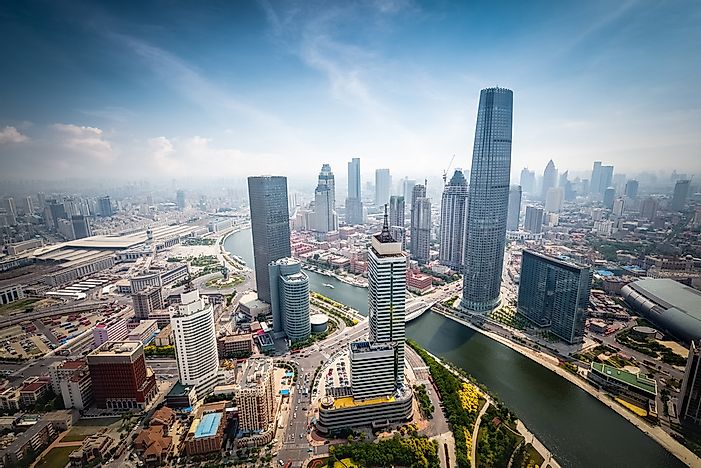
9. Tianjin - 12.7 million

#9 Tianjin - 12.7 million
Tianjin lies in China's northern coastal region, and it has over 12 million residents. Tianjin developed as a trading center after the Grand Canal was opened in the era of the Sui Dynasty. The city saw particular growth under the Qing Dynasty as well as the Republic of China, and it has served as a treaty port since 1860. Tianjin is also a gateway to Beijing, and European architecture reflects its colonial history. The city's GDP in 2014 was 1.572 trillion yuan with the highest GDP per capita in the country at $17,126.

8. Manila - 12.8 million

#8 Manila - 12.8 million
The city of Manila was first founded by the Spanish in 1571. Because of this, the city is home to many historic sites dating back hundreds of years as well as a unique mix of architectural styles. The design of the city was carefully planned by American architect and urban planner, Daniel Burnham in 1905. Today, the city is the capital of the Philippines and listed as an alpha-global city. Manila sits on the shores of Manila Bay, and is renown for its harbor. The city is prone to natural disasters such as floods, earthquakes, tsunamis, and typhoons.

7. Moscow - 13.1 million

#7 Moscow - 13.1 million
Moscow is Russia's largest city as well as the country's capital. Situated on the banks of the Moskva River in central Russia, the city is the world's northernmost megacity. The city has been the seat of power for a multitude of states before being named as the capital of Russia and the home of the Government of Russia. The city is known for its well-developed transit network, large green areas, and stunning architecture.

6. Tokyo - 13.6 million

#6 Tokyo - 13.6 million
Tokyo lies on the eastern coast of Honshu, the largest of the four islands that make up Japan. The city is the Japanese capital and one of Japan's forty-seven prefectures. The city was initially called Edo but was renamed in 1868 when the Japanese imperial family relocated there from Kyoto. Tokyo's metropolis has an estimated 13,617,445 residents. Tokyo is home to fifty-one of the Fortune Global 500 firms, and it is ranked 4th in the Global Cities Index. The inhabitants of Tokyo are almost all Japanese with communities of Chinese and Koreans. Tokyo is home to headquarters of large corporations and financial institutions while the manufacturing sector is mainly concentrated in Yokohama, Chiba, and Kawasaki.

5. Dhaka - 14.5

#5 Dhaka - 14.5
The city now known as Dhaka has been a prominent commercial center since the 17th century and has been the capital of several empires and countries before becoming the capital of the newly independent Bangladesh in 1971. With a population of 14.5 million people, it is the largest city in Bangladesh and one of the major cities of South Asia. The city's population has grown tremendously over the past several decades emerging as a megacity by the 21st century. It is the major financial, political, and cultural center of the region.

4. Istanbul - 14.6 million

#4 Istanbul - 14.6 million
Istanbul had a fascinating history having been established around 660 BCE as Byzantion and reestablished in 330 CE as Constantinople. Istanbul was a capital of the Roman, Byzantine, Latin, and Ottoman Empires, the latter which transformed it into an Islamic center. The city was positioned along the infamous Silk Road which facilitated the settlement of diverse peoples in its territory. Istanbul has over 14 million inhabitants, and it attracts millions of tourists yearly as one of the most sought-after European tourist destinations. Istanbul has also earned a reputation as a historical, arts, cultural, and entertainment hub.

3. Karachi - 18 million

#3 Karachi - 18 million
Karachi serves as the capital of Sindh Province, and its greater metropolitan area has 18 million residents. The city enjoys strategic location on the Arabian Sea, and it is home to Port Bin Qasim and Port of Karachi which are among Pakistan's largest ports. The city was established as a fortified village in 1729 called Kolachi, and it gained prominence with the occupation of the British. Karachi's residents belong to different ethnicities, races, and religions making it Pakistan's most diverse and secular city. Karachi's formal economy was valued at $113 billion in 2014, and it generates about 20% of the nation's GDP.

2. Beijing - 18.5 million

#2 Beijing - 18.5 million
Beijing is the capital of China, and it sits on the North China plain in the country's north-central region. The city, also called Peking, has an eventful history from being one of the Four Great Ancient Capitals of China to foreign occupation as well as civil war in the 20th century. Beijing established itself as an industrial sector in the aftermath of the Communist Revolution of 1949. Automobiles, textiles, petrochemicals, aerospace equipment, and semiconductors are some of the products produced by the city's industrial sector. Beijing is home to over 20 million residents. As a cultural center, Beijing boasts of seven World Heritage Sites listed by UNESCO.

1. Shanghai - 24.1 million

#1 Shanghai - 24.1 million
Shanghai's population of 24.1 million makes it the top populous city proper not only in Asia but in the world as well. Shanghai strategically lies in the Yangtze River Delta and the city's port is ranked as the world's busiest having handled 37 million TEUs in 2016. Qinglong Town, founded in 746, preceded Shanghai and it grew as a trading port in Imperial China. Shanghai's economic potential made it a center of conflict in the 19th century as the British and French fought to control the city. The Japanese also invaded Shanghai during the 2nd World War. Shanghai is an economic and trading hub in modern day China, and it has reported double-digit growth since 1992 excluding the global recession of 2008 and 2009. Shanghai's top three service sectors are real estate, financial services, and retail while manufacturing accounts for about 40% of the total output. Shanghai hosts numerous industrial zones such as the Shanghai Hongqiao Economic and Technological Development Zone. Shanghai attracts populations of local immigrants as well as foreign settlers from Japan, the US, and Korea.

What's the Biggest City in the World?

Shanghai is the most populated city in the world with a total population of 24.1 million people. After Shanghai, the largest cities are Beijing, Karachi, Istanbul, and Dhaka.

The World's Largest Cities

RankCityCountryPopulation
1ShanghaiChina24,153,000
2BeijingChina18,590,000
3KarachiPakistan18,000,000
4IstanbulTurkey14,657,000
5DhakaBangladesh14,543,000
6TokyoJapan13,617,000
7MoscowRussia13,197,596
8ManilaPhilippines12,877,000
9TianjinChina12,784,000
10MumbaiIndia12,400,000
11Sao PauloBrazil12,038,000
12ShenzhenChina11,908,000
13GuangzhouChina11,548,000
14DelhiIndia11,035,000
15WuhanChina10,608,000
16LahorePakistan10,355,000
17SeoulSouth Korea10,290,000
18ChengduChina10,152,000
19KinshasaCongo D.R.10,125,000
20LimaPeru9,752,000
21JakartaIndonesia9,608,000
22CairoEgypt9,500,000
23Mexico CityMexico8,919,000
24TehranIran8,847,000
25BaghdadIraq8,765,000
26XianChina8,705,000
27LondonUK8,674,000
28New York CityUSA8,550,000
29NanjingChina8,460,000
30BangaloreIndia8,444,000

Sunday, December 15, 2019

Venomous Golden Lancehead Of Brazil's Snake Island: Why It Must Be Left Alone?

The presence of the golden lancehead makes the Snake Island one of the world's most dangerous places but the snake itself is critically endangered.


The Golden lancehead snake, scientifically known as Bothrops insularis is one of the most venomous snakes in the world. The snake is endemic to the Ilha de Queimada Grande Island, popularly known as Snake Island. The island, situated about 90 miles off the coast of the Brazilian state of Sao Paulo, covers an area of 110 acres. Snake Island consists of tropical and subtropical moist forests, shrubs, and open spaces. At first glance, the island seems like one of those tropical destinations everyone dreams about. However, the island is home to thousands of venomous snakes that inhabiting the island, making it one of the most dangerous places on earth. Golden lancehead snakes present on the island are also not safe on the island because they face threats from poachers, habitat degradation, and diseases. In the last 15 years, their population has declined by nearly 50% by some estimates. The species is currently listed as critically endangered by the International Union for Conservation of Nature. If urgent action is not taken, conservationists are concerned that the species, which is only found on the island, might be driven to extinction.

Importance Of The Golden Lancehead Snake

People using high-blood pressure medication often take captopril or its derivatives, a lifesaving drug that is developed from toxins obtained from the lancehead viper. According to Zoltan Takacs, founder of the World Toxin Bank, the use of snake venom in medicine, opened up a new class of medication known as ACE (angiotensin-converting enzyme) inhibitors, currently used to treat over 40 million people around the world. The approval of captopril by the FDA in 1981, helped push the idea that venoms could be used in the creation of modern medicine. Since then, venom based medicine has flourished. The boom has also prompted scientists from different parts of the world to seek out rare and venomous species of snakes in search of more potent drugs.

Golden Lancehead Snake Bites

Experts believe that a bite from the lancehead snake on a human carries a 7% chance of death. Even with treatment, humans still face a 3% chance of dying. Venom from the snake is likely to cause brain hemorrhaging, kidney failure, intestinal bleeding, and necrosis of muscular tissue. Lancehead viper venom is hemotoxic, which means that it destroys red blood cells, disrupts blood clotting, causes organ degeneration, and tissue damage. The venom thus helps digest the prey before the snake swallows it. The venom is also known to have neurotoxic properties, meaning that it can cause muscle paralysis, respiratory difficulty, and death. Chemical analysis of the snake’s venom indicates that it is five times more potent than that of its mainland cousin, Bothrops jararaca. The venom also acts faster than that of its cousins. Despite being one of the most venomous snakes in the world, there has never been a recorded snake bite on humans. There are, however, several legends about fatalities on the island. One such tale tells of a fisherman who strayed and decided to search for bananas on the island, his body was discovered days later in his boat, with snake bite marks on it. From 1909 to the 1920s, there were a few people who lived on the island to run its lighthouse. According to other local tales, the islands last lighthouse keeper and his entire family died after numerous snakes slithered through the windows of his home and attacked them. Operations at the lighthouse have since been automated and only require annual maintenance services from the Brazilian Navy. The island is also currently uninhabited, and adventure travel to the island is not allowed by the authorities. However, a few scientists are allowed on the island to study the snakes. The scientists also occasionally milk golden lancehead snakes for their venom, which is used in developing medication.

Diet

Golden lancehead snakes feed on perching migratory birds that stopover at the island and lizards. There are also incidents of cannibalism among the snakes. Golden lancehead newborns and younger snakes feed on invertebrates. Scientists believe that about 11,000 years ago, a rise in sea levels gradually separated the Ilha da Queimada Grande Island from mainland Brazil, leading to the isolation of the species. The snakes, therefore, evolved over thousands of years on a different path compared to their mainland cousins. A lack of ground predators meant that they reproduced rapidly. However, the only challenge was that the island also lacked ground prey. The snakes, therefore, slithered up the trees to hunt migratory birds. Golden lancehead snakes also evolved one of the most potent venoms in the world that kill prey almost instantly.

Poaching And Hunting

Golden lancehead snakes are in very high demand in the black market. Wealthy animal collectors from around the world are particularly interested in the species due to their uniqueness. Overzealous scientists, eager to make medical breakthroughs, also drive the high demand on the black market. The island is therefore frequented by wildlife smugglers keen to cash in on the lethal vipers. Experts estimate that a single golden lancehead snake can go for between $10,000 and $30,000, which is an attractive sum of money for the poachers. Research suggests that the illegal removal of individuals from the island could be a reason behind the decline of the golden lancehead population. Poaching is particularly harmful to the species since it targets the largest and thus the oldest individuals, which are also the most reproductively mature. Targeting such older snakes means that fewer snakes in the population reach old age classes leaving higher proportions of younger snakes. Studies also reveal that body size is usually positively related to fecundity, especially in female reptiles. A decline of older and larger individuals could, therefore, lead to a drop in average population fecundity, which negatively affects population growth. Similar trends are observed in the green python (Morelia viridis) populations in Oceania. Targeting adult females can, however, be advantageous when establishing colonies of captive-bred snakes.

Habitat Degradation Through Fires

In the past, fires have been deliberately started on the island in an attempt to eliminate the golden lancehead snakes so that acreage on the island can be utilized for plantation agriculture. The island’s name, Ilha da Queimada Grande, is a Portuguese title that loosely translates to Slash and Burn Fire or Big Burnt Island. The name refers to an attempt made by early developers to establish a banana plantation on the island through the slash and burn method, which is an environmentally destructive technique. Such activities likely led to the death of a significant population of snakes on the island. Numerous snakes on the island have eventually forced the developers to abandon their plans.

Habitat Destruction On Mainland Brazil

Conservationists are also concerned about habitat destruction on mainland Brazil. Although the snake island is miles away, many of the birds that arrive on the island (a primary source of food for the snakes) originate from mainland Brazil. The golden lancehead snake preys on two out of 41 migratory birds that seasonally arrive on the island. The tyrant flycatcher is the most common prey among adult pitvipers. The bird is found on the coast of southeastern Brazil towards the end of the wet season (austral summer). Low numbers of tyrant flycatcher birds making stops on the island in the corresponding season results in low survival rates of the snake population due to a scarcity of food. Prey availability also affects reproduction. Golden lancehead snakes have lower breeding frequency than the B. jararaca species found on the mainland, which enjoys relatively higher prey availability rates. The observation indicates that there is a close relationship between prey availability and population trends. Migratory birds, therefore, help maintain a delicate balance on the island’s ecosystem. Land clearing and the destruction of forests on mainland Brazil essentially robs migratory birds of their natural habitat leading to a decline in the bird population, which consequently affects the delicate balance on the island. Such human-made destructions have led to a steep decline in the number of migratory birds making stopovers on the island, which means less food for the snakes.

Habitat Destruction Through Vegetation Clearing

The Brazilian Navy has also been accused of destructive vegetation clearing around the lighthouse. Such activity negatively affects the habitat on the island, which consequently affects the snake population. Since the species is only found on the island, any alteration of its environment can have potentially devastating effects on the snake population.

Conservation Of The Species

Experts suggest that conservation of the golden lancehead’s habitat and the eradication of poaching are the most sustainable methods of saving the species. New innovative ideas are also being developed to help save the species. Artificial insemination is currently being researched by Rogerio Zacariotti, a conservation biologist, as a means of preserving the species. The technique has been successfully used to aid in the reproduction of other endangered species, but it has yet to be perfected in snake reproduction. The procedure, as done by Zacariotti, involves catching a live venomous snake, restraining it, and then massaging the sperm toward the exit where it is collected. The collected specimen is then used for future implantation.

Brazil's Forbidden Snake Island

Ilha da Queimada Grande has been shut off from the public in order to protect both people and the Golden Lancehead pit vipers that live there.


Description

The highly feared Ilha da Queimada Grande, or Snake Island, of Brazil is one of the most dangerous places in the world, and a place where human entry is completely restricted to save people from dying an agonizing death triggered by death bites dealt by the island’s Golden Lancehead pit vipers. The Snake Island is located 33 kilometers away from the mainland Brazilian city of Sao Paulo on the Atlantic Ocean. The island encompasses an area of around 430,000 square meters, with an elevation of approximately 206 meters above sea level.

History and Conservation

In the past, during Portuguese occupation of Brazil, the lha da Queimada Grande was subjected to slash and burn agricultural techniques to clear vast tracts of native forests for banana plantations. However, these attempts were not too successful and discarded at a later period. In 1909, a lighthouse was constructed on the island to warn ships about this island which now operates in an auto mode. Recognizing the dangers to human life from the snakes of the island, the Brazilian Navy completely banned the entry of all people to the island except for researchers and navy personnel with authorized consent to enter the island. While locals claim that the snakes were brought on the island by pirates to protect their buried treasures, scientists claim that the island was cut off from the mainland 11,000 years ago by rising sea levels. This led to an independent evolution of snakes on this island, resulting in the endemic Golden Lancehead pit vipers.

The Golden Lancehead Pit Viper

#3 The Golden Lancehead Pit Viper
Endemic to the lha de Queimada Granda in Brazil, the Golden Lancehead pit viper (Bothrops insularis) is one of the most poisonous snakes in the world. The length of the snakes range between 70 and 118 centimeters. Like other snakes belonging to the Bothrops genus, the Golden Lancehead has an elongated head pointed at the nose. The golden-brown color of its body lends it its common name. The snake produces venom which is both hemotoxic and neurotoxic in nature. Its diet is based on birds, lizards, and other snakes. It is also known to practice cannibalism. Since the species inhabit an island which is completely off limits to human entry, very little data regarding human deaths induced by this snake exists. However, it is claimed that, if untreated, the Bothrops venom can kill an adult human being in less than an hour.

Habitat and Biodiversity

The lha da Queimada Grande region experiences a temperate climate. Large parts of the area of this island are covered by rainforests while there are also areas with exposed bare rocks and grassy clearings. Around 2,000 to 4,000 Golden Lancehead pit vipers inhabit the island. Besides these vipers, other species of snakes, frogs and lizards also occur here. A large number of birds, many of them migratory in nature, also visit the lha da Queimada Grande, some of them ending up as the prey of the Golden Lanceheads. A large biodiversity of insect species also thrives on this island.

Environmental Threats and Territorial Disputes

The Golden Lanceheads of Iha da Queimada Grande are currently suffering from several threats to their population. Though highly protected on the island where human entry is completely restricted without permission, the snakes are illegally captured or poached by "biopirates" who smuggle these snakes to scientists or collectors who are ready to purchase them for prices as high as $10,000 to $30,000 USD. The clearance of vegetation on the island by the Brazilian Navy also impacts the survival of these snakes. Over the last 15 years, the population of the Golden Lanceheads has decimated by nearly 50%.

Where is Brazil's Forbidden Snake Island?

Snake Island is located 33 kilometers away from the mainland Brazilian city of Sao Paulo on the Atlantic Ocean. The island encompasses an area of around 430,000 square meters, with an elevation of approximately 206 meters above sea level.

The Smallest Snake In The World

The Barbados threadsnake (Leptotyphlops carlae) is the world's smallest snake.


The Barbados threadsnake, scientifically known as the Tetracheilostoma carlae is the smallest of all snake species. It belongs to the Leptotyphlopidae family. The tiny snake, identified in 2008, weighs 0.02 ounces on average and measures an average of 3.94 inches long with the longest specimen ever recorded reaching 4.09 inches. The tiny snake has a gray, pink, or mauve color and looks like a shiny earthworm. The snake is described as being as wide as a spaghetti noodle and could easily be mistaken for a worm.

Habitat and Range

The snake species is thought to be found in the Caribbean island of Barbados and likely in the eastern forests of Barbados. There are reports that the snake species are also found in the islands of Antigua and Barbuda. The first specimen was found under the rocks in the forest of Barbados. Their living habitats are limited to only a few miles of the secondary forest.

Reproduction

This species of snake are oviparous, meaning that they lay eggs for reproduction. The females lay only one egg at a time and when it hatches a young offspring emerges, which is about half the mother’s length. All species of small snakes typically have newborns which are relatively large compared to the adults. Large snakes have young ones which are about one-tenth of the adult’s body length, while small snakes like the Barbados threadsnakes have offspring which are about one-half the size of the adults. The eggs laid by the small snakes are also large in comparison to the size of the parent. The Barbados threadsnake lays a tiny egg which is about the shape and size of a long grain of rice. Other snakes lay more spherical eggs.

Diet

Although not much is known about the Barbados threadsnake, it is believed to feed mainly on ants, termites, and other insect larvae found in the soil. This feeding habit is as a result of its habit of burrowing.

Conservation

Not much is known concerning the distribution, abundance, or the ecology of this diminutive snake. However, scientists believe that they could be threatened and possibly facing extinction because much of the original forest of Barbados has been cleared. The forest in the eastern part of Barbados covers only 2% of the original cover because much has been converted to agriculture. It is believed that these species require forests habitats for survival. According to the IUCN red list, the species is categorized as a critically endangered species.

What is the Smallest Snake in the World?

The Barbados threadsnake, scientifically known as the Tetracheilostoma carlae is the smallest of all snake species. It belongs to the Leptotyphlopidae family. The tiny snake, identified in 2008, weighs 0.02 ounces on average and measures an average of 3.94 inches long with the longest specimen ever recorded reaching 4.09 inches.

10 Facts About the Copperhead Snake

The Copperhead Snake (Agkistrodon contortrix) is one of the most common snake species in North America.


The Copperhead Snake (Agkistrodon contortrix) is one of the most common snake species in North America. Their venom is fairly weak, and the bites almost never end up fatal for people. Still, they bite frequently, so here are 10 facts about the Copperhead snake if you ever come across one.

Color

As the name tells us, the head of the Copperhead is in vibrant copper-red color. Copperhead Snake is a pit viper, and another characteristic of that species is that they have a small pit between the eyes and the nostrils, which serves as a heat-sensor. They use that pit to detect warm-blooded animals before they strike.

Size

Copperheads are considered to be medium-sized snakes, with their length being around 2 or 3 feet. Females are a bit longer than males, but males have longer tails. Their bodies are pretty thick and sturdy.

Head Shape

The head of a Copperhead snake is in the shape of a triangle. There is a noticeable ridge that separates the top of their heads from the eyes and nostrils. The pupil of a Copperhead is positioned vertically, and the color of the iris is mostly orange but can be in a reddish-brown shade.

Scaled Body Pattern

Like many of the other snakes, Copperheads also have scales over their bodies. This is the so-called ''dorsal pattern", where every scale is in a shape of an hourglass, changing colors from dark and red shades of brown on the top, and more lighter-pinkish colors on the back. Those scales are typically more prominent on each of the snake sides, and they become more narrow as they come towards the center or the back of the snake.
Many other snakes that are not venomous have a very similar pattern, but remember, Copperhead is the only snake that has scales shaped like an hourglass! The head of an adult Copperhead snake, however, does not have the same scaled ornamentations.
Until they reach the adult stage, young Copperhead hatchlings body patterns are grayer than anything else, and the top of their tail is in very bright yellow or green shades.

Copperhead Territory

The Copperhead snakes can be found anywhere across the southern parts of New England, all the way up to the northern parts of Mexico. They are five distinct subspecies of the Copperhead, based on the location where they live. The ones that are considered to be spread out the most are the northern specimens, who occupy the territories of Alabama, Massachusetts, and Illinois.
They are mostly found in the woods, but they are quite capable of living in other types of ecosystems, meaning they can be found in more urban areas. They can survive in rock covered areas, deserts and canyons, and basically, any setting that has both sunlight and shade.

Copperhead's Social Life

Copperheads most commonly do their prey hunting alone, so they are defined as a semi-social snake. However, they always hibernate within some sort of a snake community. They like to return to the same den every year.
Copperheads like to hunt during the daytime in spring or fall. Still, when the summer comes, they turn into night-loving animals and catch prey using their heat-sensor. They usually leave their den in the late spring and go searching for food. They come back to hibernation in early fall. Copperheads prefer humid and warm environments, and can sometimes climb trees when searching for prey.

The Hunter's Way

Copperheads are, in essence, predators. They mostly sit and wait and catch small prey bursting out of a bush. When they engage in a battle with bigger prey, they first bite the animal and release it. They know the venom is going to kick in soon, so they track down the victim.
Like most of the snake species, the Copperheads eat their prey whole, utilizing the flexibility of their hinged jaws. Interestingly, Copperheads eat only up to 12 times a year.

The Young Hunter's Alternative

Young Copperheads do not have the same strengths to tackle large prey as adults, so their diet consists mostly of smaller insects. The young ones are especially good at catching caterpillars. In hunt mode, a young Copperhead lays perfectly still, with only the very top of their tail moving and attracting animals like lizards or frogs. Once the prey comes close enough, they strike because they are born with the same set of fangs and the ability to inject venom.

Mating Season

The time when Copperheads engage in mating rituals is usually between February and May, and other rounds happen from August to October. To grab the female's attention, male Copperheads fight between themselves in a body-shoving contest. A male that loses a fight is likely never to rechallenge another male.
Females can also engage in combat to find their partner, and they will always turn down the male that does not want to put on a fight with her. After the mating is done, the female has the ability to delay fertilization for a few months, storing the sperm until the hibernation period is over.

Ovoviviparous Species

After the mating, the eggs incubate within the female. The little Copperheads are born alive, and a female Copperhead can give birth up to 18 young ones. The venom found in hatchlings is strong as the one found in adults.

The Geography Of Rome

The geography surrounding Rome, an ancient Italian city on the banks of the Tiber River, has heavily influenced the expansion of the city through the ages.


5. Where Is Rome Located? 

The historic city of Rome is located in the central-western part of the Italian Peninsula on the banks of the Tiber River in the Lazio region of Italy. The city is the capital of Italy and also its biggest and most populated metropolis hosting 2.9 million residents within an area of 1,285 square km. Vatican City, a country, is located within the boundaries of Rome making it the only example of a country within a city. 


4. Climate Of Rome

Mediterranean climate prevails in Rome characterized by dry and hot summers, and humid, cold winters. During the warmest months of July and August, the average temperature during the day is 30 °C while at night, it is 18 °C. In the coldest winter month of January, the average day temperature is 12 °C, and that at night is 3 °C. Heavy snowfall is extremely rare, but light snowfall occurs almost every winter. However, snow accumulation on the ground is not known to happen frequently.


 The pleasant climate of Rome favors heavy tourist footfall in the city throughout the year.

3. The Tiber River Of Rome

The Tiber River is a historic river in Europe, famous for the city of Rome that is located on its banks. The Tiber River is the second longest river in the country after the River Po. The river traces its origin to the slope of Monte Fumaiolo from where it flows for 405 km in a generally southern direction and drains into the Tyrrhenian Sea near Ostia Antica. According to some ancient writers, the Tiber River was originally known as Albula but renamed Tiberis after a king of Alba Longa, King Tiberius, died by drowning in the river. The river has played a vital role in the birth and expansion of the city of Rome as will be explained in the below sections. Another river, the Aniene also crosses Rome. The river joins the Tiber north of the historic center of the city.

2. Geography Of Ancient Rome And Origin Of The Roman Civilization

Historians hold the view that Rome was founded on a group of seven hills located in the present-day Lazio region of Italy. These hills, named Aventine, Caelian, Capitoline, Esquiline, Palatine, Quirinal, and Viminal are located on the Tiber River's eastern bank, in the heart of the city of Rome. It is said that small village-like settlements grew up on the summits of these seven hills but in the beginning, these settlements were not organized or unified into a single entity. The city was possibly founded by Romulus on the Palatine Hill, and gradually, the residents of all the seven hills would come together to share common interests and solve common problems, giving shape to the ancient city of Rome. Thus the aggregation of these settlements paved the way for the transformation from a proto-urban stage to an urban situation. The increase in agricultural productivity and heightened trade activities possibly boosted the growth of the city.

1. How Did The Geography Of Rome Affect Its Expansion?

The geography of a place often plays a big role in influencing the growth of settlements in the place. This fact is no different for Rome where the geography of Rome affected its expansion in a major way. The elevated location of the city on the top of the seven hills provided a sense of protection to the residents and also protected the people against flooding. All great cities of the world have developed on the banks of major rivers, and so did Rome. The waters of the Tiber River satisfied the domestic water needs of the people of the region. Also, the river facilitated irrigation and navigation. It connected Rome to the Mediterranean Sea and thus provided an easy trade route between Rome and other parts of Europe and the world.


Biggest Oil Companies In The World

With an annual revenue of $465.49 billion USD in 2017, the Saudi Aramco of Saudi Arabia is the world's highest-earning oil company.


Oil industries are a major income earner for countries with oil fields. These industries export oil to different countries around the world. Since most world economies are reliant on carbon energy forms, petroleum, and petroleum products fetch good prices earning the countries revenue and providing employment to citizens and expatriates. The largest oil company in the world is the Saudi Arabia-based Saudi Aramco. In 2017, it reported a revenue of $465.49 billion US dollars.
Unfortunately, in their exploration and daily business, these oil companies leave a negative impact on the environment, especially from the release of gasses that are responsible for global warming and ultimately climate change. Petroleum is critical to industries, and it is highly vital to maintaining and running industrial civilization as it is today. The world is consuming 30 billion barrels of oil annually, with the developed countries leading. In 2007, the US alone consumed 25% of the oil produced in that year.

The Five Biggest Oil Companies In The World

Saudi Aramco

Saudi Aramco is the world's largest oil company. Its headquarters are located in Dhahran, Saudi Arabia. The company is state-owned. It was founded in 1933 as the California-Arabian Standard Oil Company and renamed in 1988 as the Saudi Aramco. It has the largest oil reserves in the world and earns a revenue of around 465 billion US dollars a year. The company produces other products such as petroleum, natural gas, and petrochemicals. The company has a worldwide presence for exploration and distribution.

Sinopec

Sinopec is a state-owned Chinese oil company in Beijing. It is the second-largest oil company in the world with annual revenue of 455.499 billion dollars. Sinopec also deals in oil and gas exploration, production of petrochemicals, and sales and distribution services. The company expands its assets by buying other petroleum company shares as well as establishing drills in unexplored African territories. The company has been criticized for using damaging methods in the exploration of oil in Gabon’s Loango National Park. The activities of this company in the protected areas threaten the well-being of the wildlife living there. Sinopec has also been responsible for massive pollution of water bodies.

China National Petroleum Corporation

The Corporation is a state-owned organization established in 1988 with headquarters in Beijing. The company is ranked third in our list of biggest oil companies in the world with a revenue of 428.62 billion dollars. It is a major employer of more than one million people. The company is involved in the refining, production of natural gas and petrochemicals, exploration of oil fields and marketing of its products. The company has branches and investments in other countries both in Asia and Africa and shares in other oil companies around the world. The company has been held responsible for the pollution of water and air through leaks and destruction of the environment through drilling in the process of exploration

ExxonMobil

ExxonMobil is an American oil company with headquarters in Texas. It ranks fourth among the biggest oil companies in the world by revenue generated. The company was founded in 1999 through the merger of Exxon (formerly Standard Oil Company of New Jersey) and Mobil (formerly the Standard Oil Company of New York) and has a revenue of 268.9 billion dollars. ExxonMobil deals with crude oil, natural gas, petrochemicals, and other oil products. The company is criticized for its slow response to environmental pollution including the cleaning up of oil spills.

Environmental Effects Of Oil

Some of the oil companies have been responsible for environmental pollution through by-products and oil spills. The oil industry is the largest source of Volatile Organic Compounds (VOCs), the chemicals responsible for smog and ground-level ozone. Combustion of fossil fuels emits greenhouse gasses and other pollutants such as heavy metals.

What is the Biggest Oil Company in the World?

Saudi Aramco is the world's largest oil company, with a revenue of 465 billion dollars. China's Sinopec Group is the second largest, followed by the China National Petroleum Corporation. Exxonmobil is the world's fourth largest oil company.

Biggest Oil Companies In The World

RankCompanyRevenue (Billions of US Dollars)Country of Origin
1Saudi Aramco465.49Saudi Arabia
2Sinopec Group448China
3China National Petroleum Corporation428.62China
4Exxon Mobil268.9United States
5Royal Dutch Shell265The Netherlands/United Kingdom
6Kuwait Petroleum Corporation251.94Kuwait
7BP222.8United Kingdom
8Total SA212France
9Lukoil144.17Russia
10Eni131.82Italy

Sunday, December 8, 2019

What Were the Main Causes of World War II?


There were a variety of factors leading up to the Second World War, which can be divided into long-term and short-term causes.....
World War II was a devastating war that lasted from September 1939 to September 1945. The war was fought between the Axis Powers and their allies, who were led by Germany, Italy, and Japan as well as the Allied Powers and their allies (led by Britain, France, and Russia).
Although it is often said that the war began when France and Britain declared war on Germany as a result of its invasion of Poland, the causes that led to the war are more intricate. There were a variety of factors leading up to the Second World War which can be divided into short-term causes and long-term causes.

Long Term Causes

Reparations on Germany from the Treaty of Versailles

After the First World War ended in 1918, there was a general sentiment that Germany should be held responsible for their involvement in World War 1 and that limitations should be imposed on them so that they cannot seek war again. Major world leaders, including Woodrow Wilson from the United States, Vittorio Emanuele Orlando from Italy, Georges Clemenceau from France, and Lloyd George From England, gathered together to determine the ways in which Germany should be punished. Since France wanted revenge on Germany, the Treaty of Versailles was made in favor of Georges Clemenceau and was not based on Woodrow's 14-point plan which was deemed to bring peace to the region of Europe.
The treaty of Versailles called for Germany to give back the French territories that they had claimed during the Franco-Prussian War. Germany was also asked to pay an astronomically large sum of money. Some experts, including John Maynard Keynes warned that they thought the Treaty of Versailles to be too harsh. They warned that such fees would cripple the economy of Germany as the country could not afford to pay for the World War I reparations, which they warned could in turn pose a problem for the rest of Europe. It wouldn’t be long before this prophecies would prove to be a reality.

Hitler and the Rise of Other Dictators (Fascism)

Upon learning of the Treaty of Versailles, Germany became angry. It was an anger that was built upon frustration over losing the war, and anger over skyrocketing unemployment rates which were only about to get worse. During this time, Adolf Hitler saw an opportunity to entice the German people with his promises of easy solutions to the problems facing the Weimer Republic (the name of Germany at the time).
During this time, the political climate was ripe for radical affiliations and parties. One such party that was active during this time was the Nazi Party. Between the years of 1933 and 1934, Hitler took control over the party. However, it wasn’t long before he turned his reign into a dictatorship. After a failed coup to take over the Weimer government, Hitler decided to instead reach the top through legitimate means and was ultimately successful.
One of Hitler's diplomatic strategies was to make ostensibly unreasonable demands and then threaten war if these demands were not met. When concessions were made, he accepted them and continued to make new demands. Hitler believed in a rightful expansion of the homeland of the Germanic people, and ruled Nazi Germany through a lens of anti-semitic hatred. Hitler ignored the Treaty of Versailles and greatly expanded the number of German troops.
France, Italy, and Britain tried to convince Hitler to not deploy his military by signing the Munich Agreement with Nazi Germany. Prime Minister Neville Chamberlain, of Britain, famously tried to avoid another world war with his policies of appeasement that involved negotiating with HItler over the right to land in Czechoslovakia. However, all efforts of diffusion were futile.
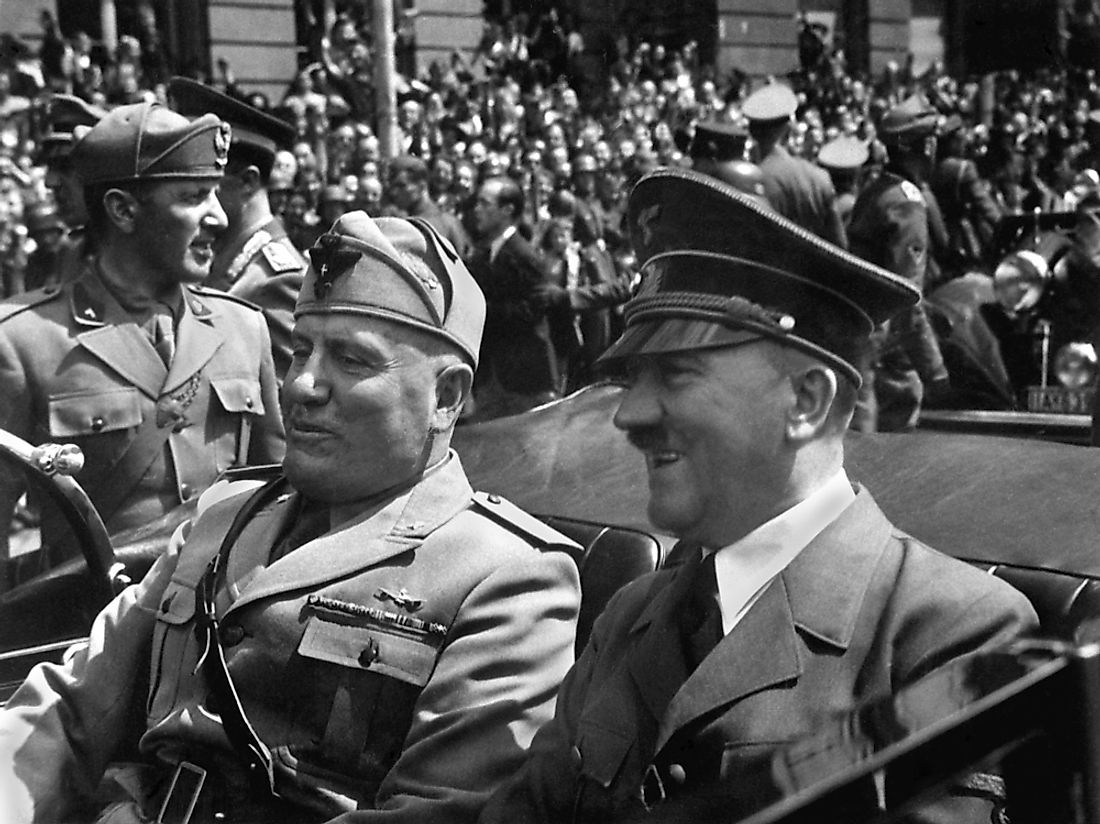
It does not help that, at the time, Hitler was not the only Fascist leader in Europe. In Italy, Benito Mussolini had been dictator since the 1920s. Mussolini had notably invented fascist politics. Though fascism differed from Nazism and was seen as less harsh, the two ideologies still had much in common as they were both heavily fueled by nationalism. In 1936, Mussolini showed his allegiance by signing a treaty with Hitler.

Hitler and Mussolini in 1940.

The Great Depression of the 1930s

From 1929 to 1939, the world was experiencing a devastating economic downturn, known as the Great Depression. There is no doubt that the Great Depression played a significant role in causing World War II. Factors such as mass unemployment in Germany and poverty in Japan provoked considerable anger among the citizens, causing them to be swayed by dictatorial governments which made it acceptable to forcefully loot from other countries whenever they wanted. As was hinted at earlier, most leaders, including Hitler, were opportunists who seized power by directing their citizen's anger and hatred towards other countries. Anger was used by governments as a tool to control the people, who could easily be swayed by promises of jobs and a better quality of life.

Short Term Causes

The Japanese invasion of Manchuria (China)

In 1931, Japan invaded Manchuria in northeast China. Fearing international backlash, the Japanese government framed the Mukden Incident as a reason for their invasion. However, their real reason was the desire to capture Chinese territory, a project that had started in the late 1800s in the First Sino-Japanese War. The invasion started with the bombing of several cities including Guangzhou, Nanjing, and Shanghai where the Imperial Japanese Army carried out terrible war crimes.

The Italian Invasion of Ethiopia

Between 1935 and 1939, Ethiopia and Italy were at war following the Italian invasion of Ethiopia (also known as Abyssinia). Among Italy’s reasons for the invasion was the desire to provide more land and resources to hungry and impoverished Italians.

The German Invasion of Poland


German soldiers invade Poland in September 1939. This moment is often seen as the beginning of the war.
Germany invaded Poland on September 1, 1939. Two weeks late, the Soviet Union followed suit. This is seen as the main point at which World War II began. Following the German attack, France and Britain both declared war on Germany.

Pearl Harbor Attack

Although not an event at the beginning of the war, the attack on Pearl Harbor is notable for bringing the United States into the war. On December 7, 1941 Japan surprised the United States by bombing a collection of warships in Pearl Harbor in Hawaii as a declaration of war. Following the bombings, the United States declared war on Japan in retaliation. Shortly after, Italy and Germany also declared war on the United States.

The 10 Smallest Countries in Europe


Vatican City, Monaco, San Marino, and Liechtenstein top the list of Europe's smallest cities by land area.
The continent of Europe has 50 countries with several countries having territories partly in Europe and Asia, while some are yet to be fully recognized. The continent is at times named Eurasia because the border between Europe and Asia is not well defined and some countries lie between the two continents. Europe has an area of about 3,930,000 miles square. The population of the continent was estimated at 738 million in 2016. The smallest countries in the continent include some countries that are only partially recognized as an independent nation.

10. Cyprus - 9,251

#10 Cyprus - 9,251

Cyprus is a Mediterranean country found south of Turkey. Humans have inhabited Cyprus - all 9,251 sq km of it - since the 10th millennium BCE. Cyprus is a member of the Commonwealth.

9. Azerbaijan - 6,960

#9 Azerbaijan - 6,960

The Republic of Azerbaijan is in the South Caucasus region. The country sits between Southwest Asia and Southeastern Europe. The side in Europe measures 2,687.27 square miles while the whole country has an area of around 33,400 square miles. Azerbaijan got independence in 1918. The country joined the Soviet Union in 1920 and left on August 30, 1991. The country is among the six independent Turkic speaking states. The population of the country was estimated to be 9.762 million in 2016
For Azerbaijan's entry on this list, we are only counting its land on the European side.

8. Luxembourg - 2,586 sq km

#8 Luxembourg - 2,586 sq km

Luxembourg is a landlocked country found in western Europe, bordered by Belgium, Germany, and France. It measure 2,586 km squared, which puts it amongst Europe's smallest countries. Luxembourg City is both the capital of Luxembourg, and one of the three capitals of the European Union (the other two are Brussels, Belgium and Strasbourg, France).

7. Georgia - 2,428 sq km

#7 Georgia - 2,428 sq km

Georgia is located in the Caucasus region of Europe and Asia. It is located in between Eastern Europe and Western Asia with the bigger part of the country being in Asia. The country’s capital is Tbilisi, which is also the biggest in the country. Georgia side in Europe has a land surface area of 937.46 square miles. The total land surface area of Georgia, including the side in Asia, is 26,911.32 square miles. The population in 2017 was estimated at 3.718 million. Georgia separated from the Soviet Union in April 1991. Georgian is the national language of the country.
Although the total land area of Georgia is larger than some of the entries on this list, we are only counting the part of Georgia that is on the European side, which is 2,428 km squared.

6. Andorra - 468 sq km

#6 Andorra - 468 sq km

The principality of Andorra is a landlocked country situated in the Eastern Pyrenees Mountains in Southwestern Europe. The principality was established in 1278 and is led by the president of France and the bishop of Urgell, Spain. Andorra has a surface area of 181 square miles. In 2016, the population estimate was 77,281. Andorra la Vella is the capital city, and it is the highest located capital city in Europe at the height of 3,356 feet. The national language is Catalan.

5. Malta - 316 sq km

#5 Malta - 316 sq km

The Republic of Malta consists of a group of islands located in the Mediterranean Sea, found in Southern Europe. The large islands include Malta, Gozo, and Comino. The island covers an area of 122 square miles. The population in 2016 was estimated at 436,947. The national language of the country is Maltese though English is used for official communication. Valletta is the capital city, and it is the smallest capital city in size in the European Union. Malta gained independence in 1964 and became a republic in 1974.

4. Liechtenstein - 160 sq km

#4 Liechtenstein - 160 sq km

Liechtenstein is a principality led by a prince. The principality is located in Central Europe and is double-landlocked. The country is located in the Rhine valley of the Alps ranges. Liechtenstein has a surface area of about 62 square miles. The principality’s population was estimated at 37,666 in 2016. German is used as the official language of communication. Liechtenstein is one of the Alpine countries which make it an ideal destination for winter sports. The capital city is Vaduz.

3. San Marino - 61 sq km

#3 San Marino - 61 sq km

The Republic of San Marino is a microstate and an enclave in Italy. The country's surface area is about 24 square miles and is mostly hilly. San Marino was the smallest republic in the world until 1968 when Nauru gained the title. The population was estimated to be 33,285 in 2016. The biggest city in the country is Serravalle, and the capital is the city of San Marino. The country is one of the richest countries in the world. San Marino is the only country where the number of motor vehicles surpasses the number of people. In 2014, there were 1,263 vehicles to 1,000 people. Italian is the official language in the country, but Romagnol is also a popular language.

2. Monaco - 1.95 sq km

#2 Monaco - 1.95 sq km

Monaco is an autonomous city-state situated on the French Riviera officially known as the Principality of Monaco. The country covers an area of 0.78 square miles and it is the second smallest country in the world. A census carried out in 2016 showed the population to be 38,499. The 1861 Franco-Monegasque treaty saw Monaco become an independent state. The official language in the principality of Monaco is French with Monegasque, Italian, and Occitan widely spoken. The country's government is a constitutional monarchy, and the current ruler is Prince Albert II. The principality of Monaco has been under the constitutional Monarchy since 1911, and the head of state is the sovereign prince. Monaco does not levy any income tax and has relatively low taxes on businesses making it a country with some of the wealthiest people. Monaco is famous for the Monaco Grand Prix.

1. Vatican City - 0.44 sq km

#1  Vatican City - 0.44 sq km

The state of Vatican City is the smallest country in Europe and as well as in the world both by size and population with an area of around 0.17 square miles. The country is not formally self-governing, and it is governed by the Holy See. The population was estimated at 1,000 in 2015. The city was established through the Lateran treaty signed on February 11, 1929, between the Holy See and Italy. Italian is the official language of the Vatican. Vatican City is located at the Vatican Mount, and so the name was derived from the mountain. The government of Vatican City is an absolute elective monarchy with the power being exercised by the head of the Roman Catholic Church, the Pope.

How Many Countries are in the World?


Most of the current experts and international authorities agree on 194 countries in existence, however, different international bodies differ greatly on how many countries there are. The 194 countries does not include Kosovo (disclaimer), or  Palestine or Western Sahara or Taiwan or  Greenland or many other partly recognized states .
There are few questions that are more difficult to answer than the total number of countries in the world, as there is no single correct answer. When looking at official statistics from various governmental and international agencies from around the globe, a great deal of discrepancy is seen for this figure. Depending upon the source you acknowledge, there may be 189, 191, 192, 193, 194, 195 or 196 independent countries in existence upon our globe today.

Member States In The United Nations

As of May 1, 2008, the United Nations had 193 official members. This number does not include the Palestine or the Vatican/Holy See (who act as non-member observers), Taiwan (whose credentials have at large been rejected by the UN since 1971), or Kosovo (which is not a UN member, but does participate actively in actions of the UN’s International Monetary Fund and World Bank).

How Many Countries Does The United States Recognize?

The US State Department recognizes 195 independent countries around the world, but that list of countries reflects the political agenda of the United States of America. For example, it includes Kosovo, but does not officially include Taiwan, as China claims that Taiwan (the ROC) is simply a province of China. Such recognition is meant to appease trading partners of the US, and further its diplomatic objectives. Such geopolitical factors are by and in large why defining an official number of independent countries around the globe is such an arduous task.

Is Taiwan An Independent Country?

Taiwan (a.k.a. The Republic of China (ROC)) is a sovereign, unitary semi-presidential constitutional republic. Its jurisdiction is almost entirely comprised by the island of Taiwan, where the capital Taipei is located, and smaller holdings over adjacent islands amidst the East China, South China, and Philippine Seas, the Taiwan and Luzon Straits. The country was formed in 1949 after the then-in-power Nationalists were defeated by the Communists (who took over the Chinese mainland and most of Mongolia) and subsequently relocated to Taiwan. Although the Taiwanese (ROC) government is the remnant of the legitimate government in place before the Communists established the People’s Republic of China (PRC), many countries have failed to recognize it claims to sovereignty as a self-governing independent nation, as the economically and militarily powerful PRC has threatened to impose diplomatic and economic sanctions against those countries choosing to recognize Taiwan.

Is Western Sahara An Independent Country?

Western Sahara is a territory in northwest Africa whose governance has been in dispute between the native Sahrawi and the Kingdom of Morocco for more than 40 years.

Is Palestine An Independent Country?

The State of Palestine, carrying on the name held by the British possession predating the 1947 establishment of the State of Israel, is recognized by 136 UN members. An Algerian-based government in exile declared Palestine’s independence from Israel in 1988, and diplomatic contentions and combat between the two are still carried on to this very day

Is Kosovo An Independent Country?

Kosovo may very well have some of the least clear national boundaries and status concerning its independent sovereignty from among all of the world’s political entities today. Formerly a part of the Communist nation of Yugoslavia, after that country’s dissolution in 1991, Kosovo became part of the newly formed Serbia and Montenegro in 1992. After Serbia and Montenegro split in 2006, the Serbian province of Kosovo’s Parliament, with its majority Albanian population, elected to form a separate republic itself two years later. Today, recognition of the Republic of Kosovo receives mixed perceptions internationally, with Kosovo, 108 UN member countries, and Taiwan viewing it as its own independent nation, while Serbia and others view it as an autonomous Serbian province.

Is The United Kingdom One Country Or 4 Countries?

England, Scotland, Wales and Northern Ireland, though considered individual countries themselves by many observers, are in fact constituent parts of the United Kingdom (UK), as recognized by the United Nations, United States, and European Union. Therefore, they are all included within the United Kingdom as a single country our list below.

Is Greenland An Independent Country?

What about Greenland? In a nation-wide referendum, the people voted in favor of increased self-rule in November 2008 by an overwhelming majority vote. With the referendum, Greenland acquired complete responsibility for its own internal affairs in June 2009. Denmark, however, continues to exercise control of Greenland's foreign affairs, security, and financial policy in consultation with Greenland's Home Rule Government, and the Danish monarch still accepted as a head of state. In that regard, Greenland is still a part of Denmark, and not recognized as an official independent country. Technically, we consider it a constituent autonomous state: a self-governing political entity that is still within the realm of the Kingdom of Denmark.

Internationally Recognized Countries

National boundaries and sovereignties are constantly shifting, but our list of independent nations, shown below, provides a fairly complete picture of the globe’s geopolitical demarcations as they stand today. Please note that we don't say this list is the ONLY answer, just that it's the best answer we can provide with the information we have on hand.
NOTE: Only countries recognized (as such) by the United Nations are listed, not dependencies and/or territories.
Regarding England, Scotland and Wales, though considered individual countries, they are all a part of the United Kingdom (UK), a European country, and therefore included within the United Kingdom on the list below.
Note: South Sudan is the planet's newest country, which brings Africa's country to a total of 54.

AFRICA (54)

  • Algeria
  • Angola
  • Benin
  • Botswana
  • Burkina
  • Burundi
  • Cameroon
  • Cape Verde
  • Central African Republic
  • Chad
  • Comoros
  • Congo
  • Congo, Democratic Republic of
  • Djibouti
  • Egypt
  • Equatorial Guinea
  • Eritrea
  • Ethiopia
  • Gabon
  • Gambia
  • Ghana
  • Guinea
  • Guinea-Bissau
  • Ivory Coast
  • Kenya
  • Lesotho
  • Liberia
  • Libya
  • Madagascar
  • Malawi
  • Mali
  • Mauritania
  • Mauritius
  • Morocco
  • Mozambique
  • Namibia
  • Niger
  • Nigeria
  • Rwanda
  • Sao Tome and Principe
  • Senegal
  • Seychelles
  • Sierra Leone
  • Somalia
  • South Africa
  • South Sudan
  • Sudan
  • Swaziland
  • Tanzania
  • Togo
  • Tunisia
  • Uganda
  • Zambia
  • Zimbabwe

ASIA (44)

  • Afghanistan
  • Bahrain
  • Bangladesh
  • Bhutan
  • Brunei
  • Burma (Myanmar)
  • Cambodia
  • China
  • East Timor
  • India
  • Indonesia
  • Iran
  • Iraq
  • Israel
  • Japan
  • Jordan
  • Kazakhstan
  • Korea, North
  • Korea, South
  • Kuwait
  • Kyrgyzstan
  • Laos
  • Lebanon
  • Malaysia
  • Maldives
  • Mongolia
  • Nepal
  • Oman
  • Pakistan
  • Philippines
  • Qatar
  • Russian Federation
  • Saudi Arabia
  • Singapore
  • Sri Lanka
  • Syria
  • Tajikistan
  • Thailand
  • Turkey
  • Turkmenistan
  • United Arab Emirates
  • Uzbekistan
  • Vietnam
  • Yemen

EUROPE (47)

  • Albania
  • Andorra
  • Armenia
  • Austria
  • Azerbaijan
  • Belarus
  • Belgium
  • Bosnia and Herzegovina
  • Bulgaria
  • Croatia
  • Cyprus
  • Czech Republic
  • Denmark
  • Estonia
  • Finland
  • France
  • Georgia
  • Germany
  • Greece
  • Hungary
  • Iceland
  • Ireland
  • Italy
  • Latvia
  • Liechtenstein
  • Lithuania
  • Luxembourg
  • Macedonia
  • Malta
  • Moldova
  • Monaco
  • Montenegro
  • Netherlands
  • Norway
  • Poland
  • Portugal
  • Romania
  • San Marino
  • Serbia
  • Slovakia
  • Slovenia
  • Spain
  • Sweden
  • Switzerland
  • Ukraine
  • United Kingdom
  • Vatican City

N. AMERICA (23)

  • Antigua and Barbuda
  • Bahamas
  • Barbados
  • Belize
  • Canada
  • Costa Rica
  • Cuba
  • Dominica
  • Dominican Republic
  • El Salvador
  • Grenada
  • Guatemala
  • Haiti
  • Honduras
  • Jamaica
  • Mexico
  • Nicaragua
  • Panama
  • Saint Kitts and Nevis
  • Saint Lucia
  • Saint Vincent and the Grenadines
  • Trinidad and Tobago
  • United States

OCEANIA (14)

  • Australia
  • Fiji
  • Kiribati
  • Marshall Islands
  • Micronesia
  • Nauru
  • New Zealand
  • Palau
  • Papua New Guinea
  • Samoa
  • Solomon Islands
  • Tonga
  • Tuvalu
  • Vanuatu

S. AMERICA (12)

  • Argentina
  • Bolivia
  • Brazil
  • Chile
  • Colombia
  • Ecuador
  • Guyana
  • Paraguay
  • Peru
  • Suriname
  • Uruguay
  • Venezuela